October 13, 2026 · 10 min read
Web Chat Quote Intake Guide for Industrial Label Makers
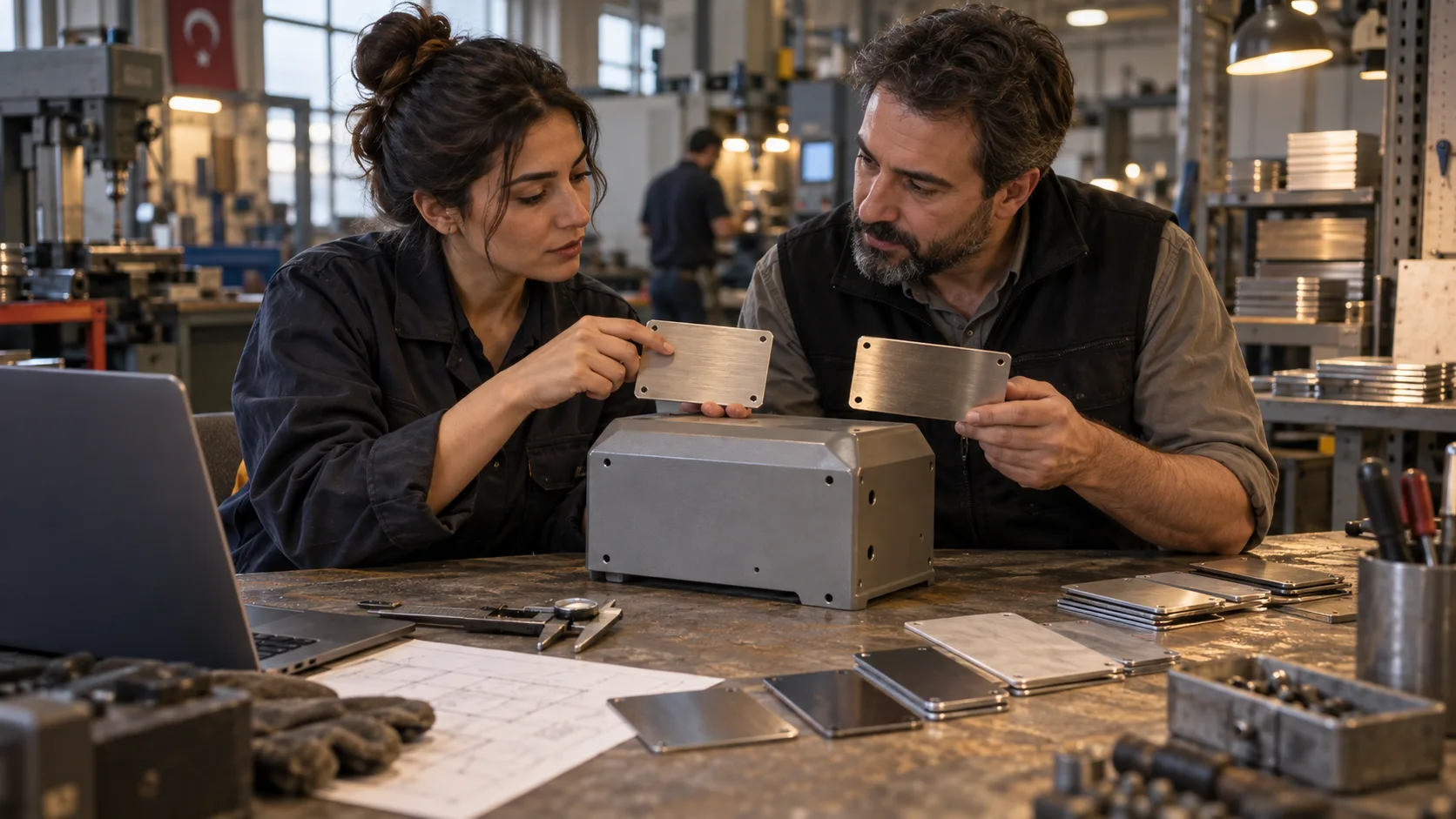
A machine builder sends a photograph and asks for 500 labels like the sample. The image does not establish dimensions, substrate, operating environment, mounting or variable serial data. A quote based on the photograph alone may need revision before production starts. For industrial label and machine nameplate manufacturers, web chat should structure use requirements and drawing versions before stating a price. Specialists must assess material, adhesive, marking method and durability suitability.
What should the brief ask before the product name?
Establish what the label identifies and where it will be installed. Machine nameplates, asset labels and warning labels do not share every requirement. A customer's commercial product name is a starting clue rather than a specification. Record purpose, visibility needs, expected operating environment and the installation team together. The customer's authorised specialists must approve warning or safety content. A chat assistant should not declare regulatory compliance.
| Quote field | Illustrative need | Verification owner |
|---|---|---|
| Purpose | Machine nameplate | Customer engineering |
| Surface | Painted metal housing | Installation team |
| Environment | Indoor, cleaning chemicals | Technical team |
| Mounting | Holes or adhesive alternatives | Design approval |
| Data | Different serial on every piece | Customer data owner |
What information belongs in the first conversation?
Separate company and contact, purpose, surface, environment, dimensions, shape, mounting, quantity, variable data, drawing, sample and target delivery date. Users should be able to leave unknown technical questions unanswered so these remain open. Web chat should expose gaps to technical sales rather than invent answers. Define mandatory quote fields from the business's actual manufacturing capabilities and arrange specialist discussion when needed.
- Record the application surface and coating.
- Describe indoor or outdoor use and known exposure.
- Collect dimensions together with units.
- Separate preferred mounting from verified decisions.
- Manage fixed artwork and variable data in separate files.
Why ask about surface and environment separately?
A label attached to stainless steel needs a different assessment from one applied to rough painted housing. Environment does not replace surface information. Record customer-known temperature conditions, liquid contact, cleaning agents, friction, sunlight and outdoor exposure. Do not invent exact values for unmeasured conditions. Material and adhesive selection should follow manufacturer technical information, sample testing where necessary and specialist review.
How should dimensions, holes and tolerances be recorded?
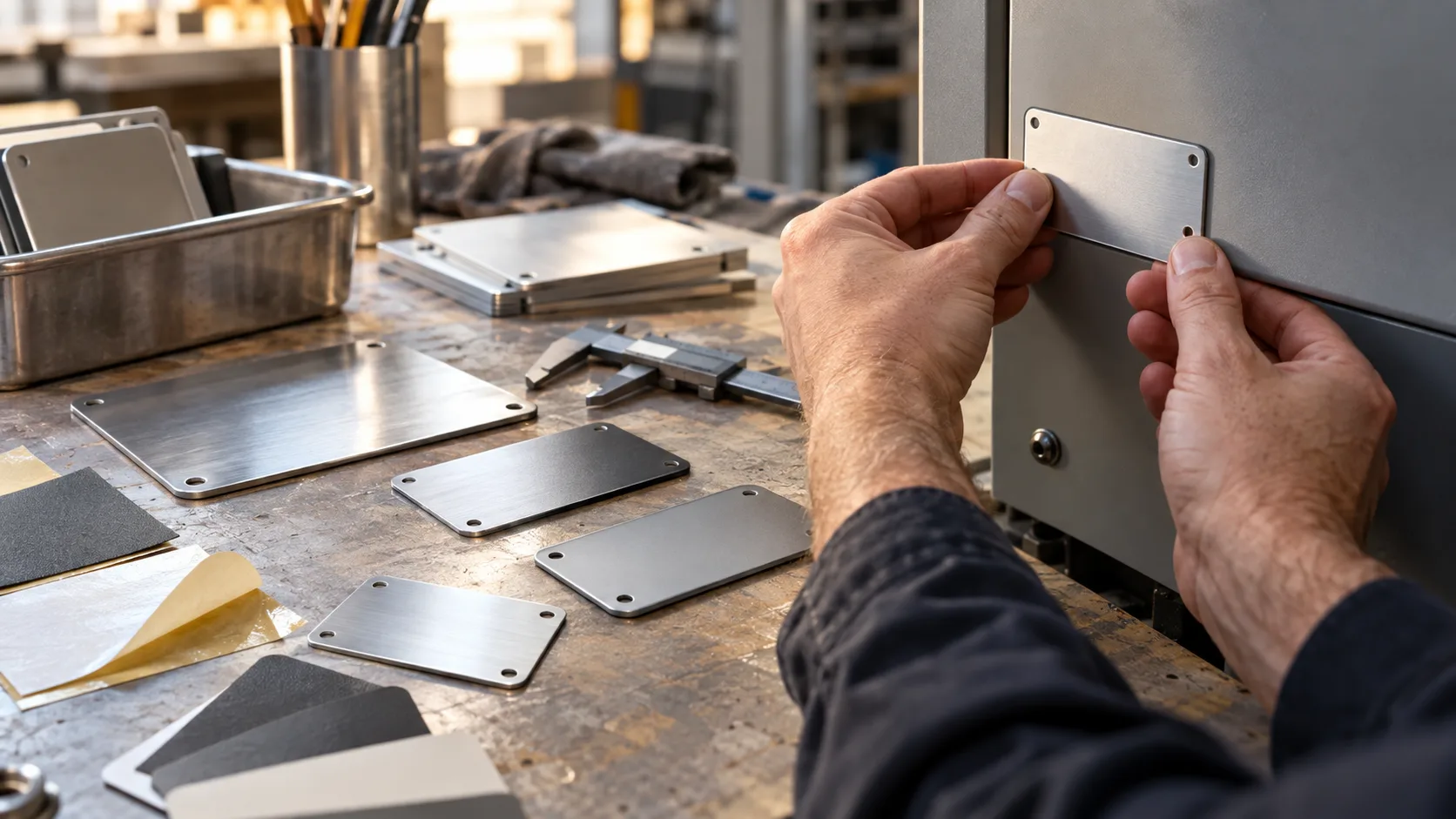
Link width, height, thickness, corner shape, hole diameter and hole centres to the same reference drawing. An entry such as '80 by 40' without a unit is not production-ready information. When drawing tolerances conflict with a spoken statement, keep the record under review. Do not infer exact hole dimensions from photographs. Show the production drawing's version and approver, and do not let a later file silently replace an existing approval.
How should fixed artwork and variable data be separated?
Logos and fixed wording may belong in artwork while serial numbers or asset identifiers belong in a structured data file. Clarify whether every row represents one label, the start and end of any range, duplicate rules and file version. Do not automatically repair blanks or duplicates in customer data; show them to the data owner. The assistant must not invent new serials or copy the previous value into a missing row. A sample output is not production approval.
What should be asked about QR codes or barcodes?
First establish what the code carries, which device will read it and which workflow uses the result. Verify links, identifiers and data format with the customer's responsible person. A code visible in an image does not prove it can be read under field conditions. Test size, contrast, surface, distance and actual reader using a real sample. Web chat should not select code type without technical approval or suggest putting secret access information or unnecessary personal data in it.
How should quantities and repeat orders reach pricing?
Ask separately about first-batch quantity, number of designs, quantity per design, variable-data rows, samples and possible repeat orders. A total of 500 pieces may hide setup work for five designs. Forecast orders should not become firm commitments. Web chat transfers this distinction to the commercial team, while the quote owner defines tooling, preparation, production, mounting accessories and shipping scope. Do not invent current prices or minimum quantities.
How do sample and serial-production approval differ?
A sample request can support material and appearance assessment, but serial production needs separate approval of drawings, data, mounting and acceptance criteria. Record the surface and conditions used in the sample test. Keep clear that one trial cannot guarantee every operating condition. A customer liking the sample is different from technical acceptance. The production order becomes ready only when the required checks in the business's approval procedure are complete.
Which dependencies belong in delivery planning?
Keep the customer's target date separate from the manufacturer's confirmed date. Drawing approval, data validation, samples, material preparation, production, quality checks and shipment are different milestones. Artwork arriving on the last day can alter the whole plan. Route urgent requests to the responsible person instead of promising delivery from assumed stock or capacity. When revisions arrive, expose the affected milestone and any renewed approval requirement.
How should artwork and contact data be protected?
Contact details may be personal data, while drawings and serial lists can be commercially sensitive. The authority's processing principles require relevant, limited and proportionate processing for specified purposes. Representative rows may be enough for the first brief instead of actual production serials. Restrict file access to assigned sales and technical roles. Do not ask for passwords or API keys in chat; use the business's approved transfer route for production files.
What summary should technical sales receive?
Include purpose, surface, environment, dimensions, mounting, quantity distribution, data format, drawing version, sample needs, timing and open questions. Customer preference and technical acceptance should remain visibly separate. Quoting staff need to know which condition is verified and which assumption awaits testing. The CNC technical quote brief explains a similar separation of files and assumptions. The human handoff guide adds a framework for transferring conversation responsibility.
Which errors belong in the pilot test?
Try missing units, an old drawing combined with a new serial file, duplicate serials, outdoor requests with unknown surfaces and urgent orders without approval. The brief should flag these for review instead of treating them as firm quotes. Measure quote-ready records through completed mandatory fields and sources. Revision reasons, changes after samples and requests returned for missing data can also be tracked. Compare these measures with the business's own baseline rather than presenting guaranteed outcomes.
Where should web chat stop, and what can BozLat do?
Automation cannot choose a suitable material when capabilities, technical data and approval owners are undefined. Establish the product and quote procedure first. BozLat can structure use, dimensions, data, visual sources and timing from web chat, expose missing information and prepare a sourced technical-sales summary. Durability, safety content, suitability, pricing and serial-production approval remain with human specialists. Explore related capabilities in services and scope options on the pricing page.
Frequently Asked Questions
Related Articles
9 min read
Web Chat Discovery Briefs for Irrigation System Firms
Qualify irrigation enquiries by site, water source, crop pattern and survey timing in web chat while leaving design and capacity decisions to technical experts.
9 min read
Web Chat Pre-Survey Intake for Solar Installation Firms
Collect roof type, location, consumption context and document status in web chat, then prepare a qualified solar survey request for engineering review.
9 min read
Web Chat Needs Briefs for Corporate Training Providers
Qualify corporate training enquiries by goals, participant profile, format and timing in web chat while leaving programme design to learning specialists.
Ready to set up an AI assistant for your business?
View Pricing