October 31, 2026 · 9 min read
Instagram DM Order Briefs for Custom Workwear Production
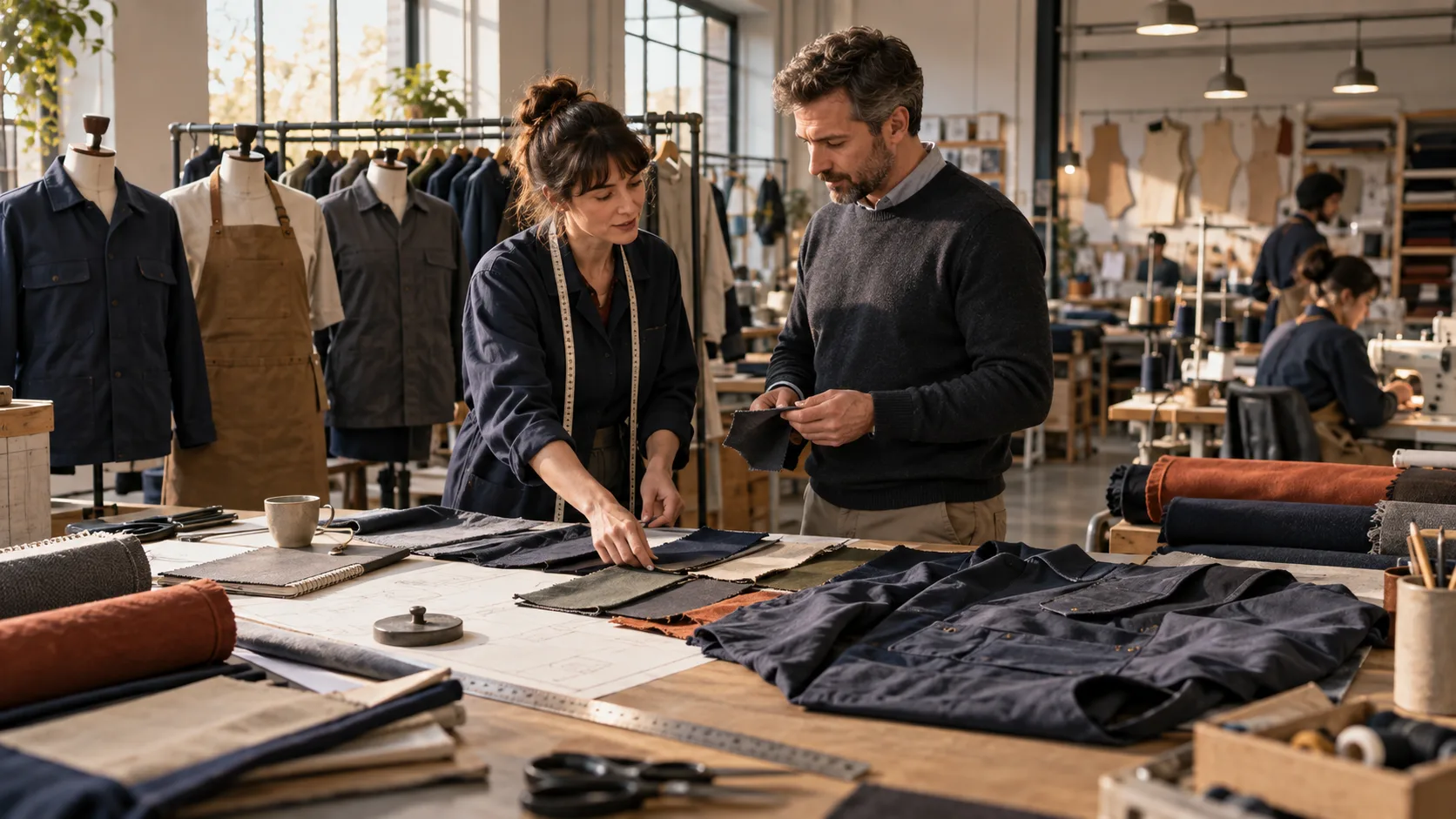
A restaurant group requests sixty aprons, but colours vary across three branches, pocket layouts differ by job and the size breakdown changes by employee. The customer sends a screenshot of the logo, sets a delivery target one day before an event and asks for an exact match. An Instagram DM flow for custom workwear should not calculate a firm quote from a picture. It should convert style, sizing, application, sample and delivery expectations into a production-ready order brief.
What is a custom workwear order brief?
The brief combines working environment, garment features, material expectations, size breakdown, logo application, quantities and target date in one record. The AI assistant does not confirm that a fabric is suitable, a size will fit a person, a logo file is production-ready or the requested date is possible. Sample, technical production and quotation decisions remain with authorised staff.
A good DM flow does not lose the customer in a catalogue. It first asks about the sector and job, then shows only relevant model choices. Every option must link to a current product source; an old post or discontinued model cannot be treated as available automatically.
Which details belong in the first consultation?
- Use context: kitchen, service, field work, warehouse, cleaning, office or another role.
- Garment type: apron, jacket, trousers, vest, shirt, outer layer or a complete set.
- Features: pockets, closure, sleeves, visibility details, movement and care requirements.
- Quantities: separate amounts by model, colour, branch, role and size.
- Logo: application position, approximate dimensions, colour, file type and authorised approver.
- Sample: physical prototype, size set, material swatch or digital placement expectation.
- Timing: need date, delivery locations, partial-delivery option and decision process.
Questions should appear in sequence and respond to earlier answers. A customer requesting aprons should not receive irrelevant questions about jacket insulation. In multi-branch orders, quantities are stored by branch, role and size instead of one total. Production staff can then detect a mismatch between the overall quantity and size totals early.
How can size breakdowns be collected safely?
Use anonymous rows or employee codes instead of names where possible. The assistant should request only the size or limited measurements required for production, not health, identity or unrelated personal details. Since standard sizes vary between makers, the manufacturer decides whether a fitting set or sample is needed.
The official personal-data processing principles from Turkey's data protection authority call for a specific legitimate purpose, relevance, proportionality and limited retention. Access, correction, storage and end-of-project deletion for size lists belong in the business's lawful process. This article is not legal advice.
How should logo files and permission be handled?
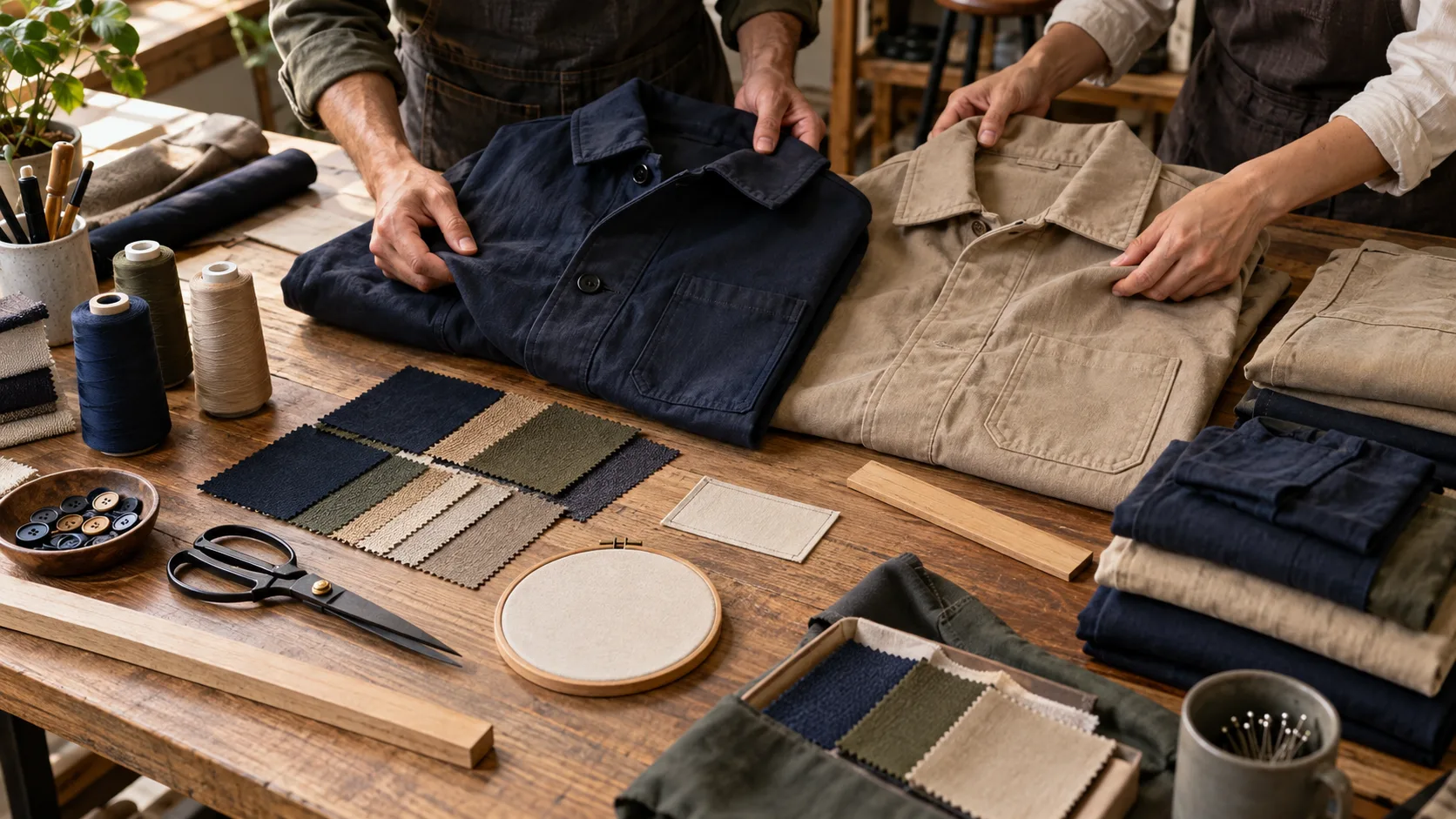
A screenshot, low-resolution JPEG or social-media profile image should not count as a production file. The assistant can request the accepted file format and colour reference for the intended method. Embroidery, print and patches may require different technical inputs, so design or production staff must confirm file suitability.
Sending a logo does not automatically prove authority for every use. The WIPO overview of intellectual property licensing explains that another business's use of a mark can be governed by permission and scope. The assistant does not make a legal judgement. It records the owner, claimed authority and approver, then routes uncertainty to a person.
How should style and material selection be limited?
When a customer asks for stain resistance, flame resistance or all-season performance, the bot must not repeat that request as verified product performance. Only properties in current manufacturer documentation can be explained with a source. If occupational safety standards or sector requirements apply, authorised specialists and the customer decide suitability.
The system should not promise an exact visual match to a reference photo. Cut, drape, colour, stitching, pockets and logo dimensions can look different in a physical sample. The assistant asks which elements matter and creates a style direction; people approve the technical drawing, materials and production method.
Which distinctions must the quotation summary preserve?
| Brief field | Information from Instagram DM | Human decision |
|---|---|---|
| Use | Job, environment and expected movement | Style and material suitability |
| Quantity | Breakdown by branch, role, colour and size | Minimum production and capacity planning |
| Logo | File, placement, colour and approximate size | Technical application and permission review |
| Sample | Size set and approval expectations | Sample method, timing and revision scope |
| Delivery | Target date, locations and partial-delivery request | Price, production schedule and final approval |
The summary may calculate but must not invent a decision. If branch quantities and size-list totals do not match, it exposes the difference instead of assigning the missing item to a size. If the logo file is missing, it identifies which portion of the quote remains provisional.
A request for an approximate budget should not produce a firm unit price from one photo. Material, quantity, application, sampling, packaging and delivery can affect the quote. The guide to answering price questions helps explain those inputs without pressuring the customer.
How should sampling and approval work?
The sample type must be separated at the start. A logo placement proof, material swatch, size set and fully sewn garment are different deliverables. The assistant can ask what the customer intends to approve and who provides approval. Authorised staff explain how far the sample represents production, along with cost, timing and return terms.
Revisions should come from one responsible person in a consolidated form. If one branch requests pockets and another does not, the bot must not choose whether this becomes one shared style or separate styles. Approved garment, colour, size breakdown and logo placement are versioned. A person assesses the effect of changes arriving after production begins.
When does the delivery date become firm?
Typing an event date is not a production commitment. Staff need sample approval, material status, size list, logo files, capacity, quality control and delivery locations before confirming a date. Messages should distinguish target date, planned date and confirmed delivery date.
For partial delivery, record which branch, role or sizes should ship first. The bot does not reorder production independently. As an approved delivery approaches, reminders can follow the current status and contact preference. The order-status automation guide helps structure status labels and expectations.
How should Instagram's technical conditions be monitored?
Instagram messaging integration depends on professional accounts, required permissions and Meta's current access conditions. The official Meta overview of Instagram Messaging describes professional accounts, message-management permissions and a route to a human agent. A production setup should not rely on an old permission list or test-account behaviour.
For shared media or posts, a webhook may provide only a content URL, and that link may not be permanent. Important order evidence should move promptly into the authorised project record. Do not send arbitrary messages outside customer-initiated conversations, and verify current platform rules in official documentation. The Instagram DM automation guide covers the broader setup.
What does a practical order flow look like?
- The assistant collects work context, style and approximate total quantity, while stating that no quote is confirmed.
- It organises quantities by branch, role, colour and size and flags differences between totals.
- It asks for logo placement, file type, colour and authorised approver without assuming permission.
- It clarifies sample type, size-set needs and the person responsible for feedback.
- It exposes conflicts in target dates, delivery locations and partial-delivery expectations.
- It sends production staff a sourced summary and tells the customer the approved price, sample and scheduling step.
For a three-branch restaurant order, each branch may need a different apron colour while kitchen and service teams require different pockets. The flow does not leave these details in one paragraph. It creates a matrix, showing shared features and distinct styles. Production staff decide how many product codes the order requires.
How should performance be measured?
DM-to-quote conversion is not enough. Track quantities changed after quotation, size lists requested again, unsuitable logo files, expectation gaps found in samples, unapproved revisions and target dates mistaken for promises. Results should not be generalised without order size, style count and period.
Human corrections should improve question order and the knowledge base. When a style is discontinued, an accepted logo format changes or a minimum order rule is updated, affected replies need to be identifiable. Every catalogue fact should have a source and review date.
What can BozLat do in this flow?
BozLat can collect use, style, quantity, size breakdown, logo, sample and delivery expectations through Instagram DM, then send production staff a sourced summary of missing fields and total mismatches. Technical suitability, brand permission, samples, price, capacity and delivery approval remain with the manufacturer. Explore the approach in the services section and compare options on the pricing page.
Frequently Asked Questions
Related Articles
9 min read
Instagram DM Print Quote Intake for Commercial Printers
Collect size, quantity, stock, colour, finishing and delivery details through Instagram DM, then prepare a production-ready print quote brief for your team.
9 min read
Instagram DM Project Intake for Exhibition Stand Teams
Structure exhibition stand enquiries by event, space, goals, brand files and installation timing in Instagram DM while specialists retain technical approval.
11 min read
Instagram DM Project Briefs for Bespoke Lighting Studios
Separate reference images, dimensions, materials, quantities and fitting expectations in Instagram DM to prepare a useful brief before a bespoke lighting quote.
Ready to set up an AI assistant for your business?
View Pricing