October 26, 2026 · 9 min read
Camera Rental Web Chat for Equipment Compatibility

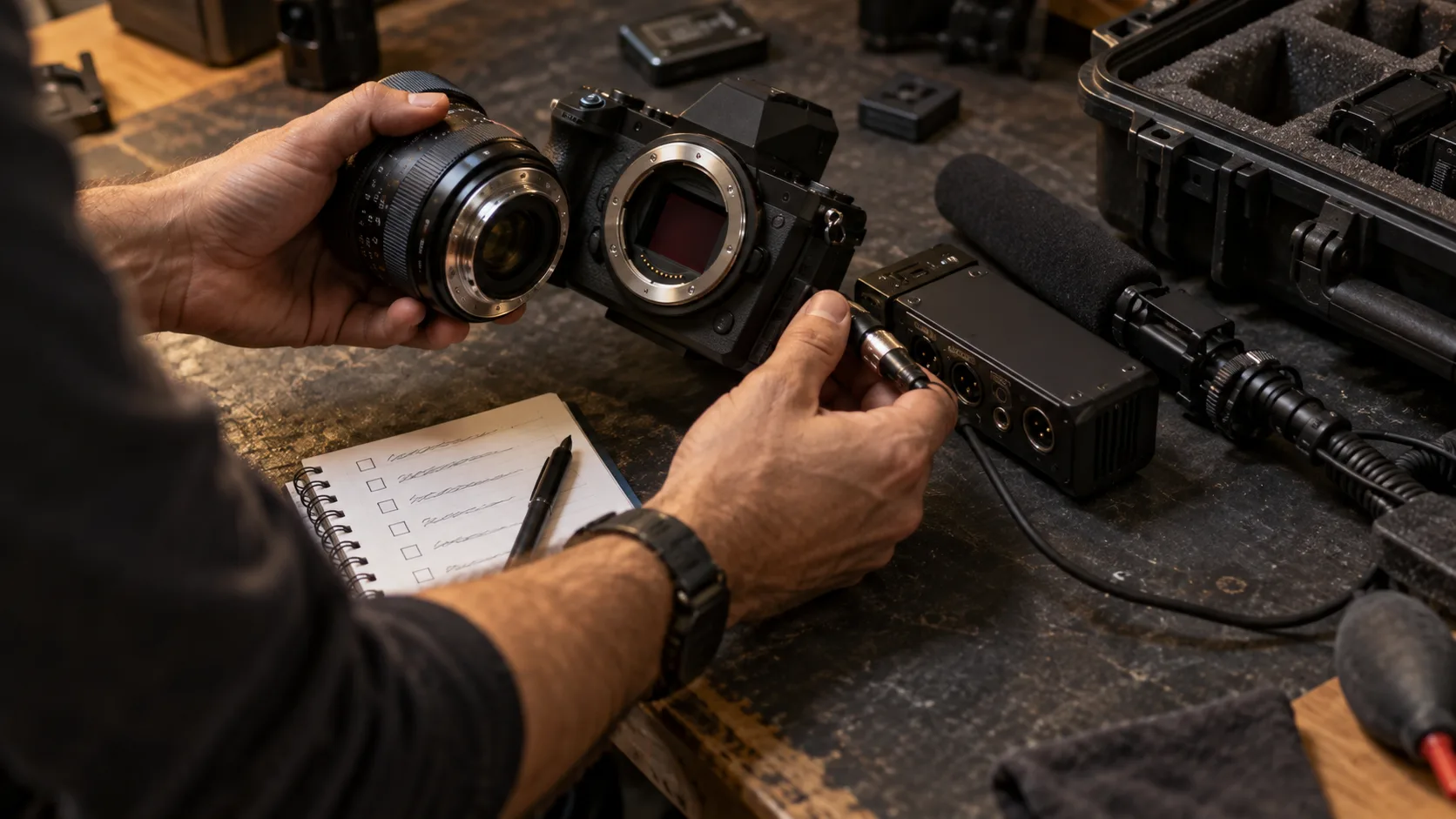
A customer chooses a camera and gets close to booking, then one question stops the plan: will this lens fit the body, and will the microphone work with the recording setup? For camera rental businesses, a fast answer matters less than a correct kit. When web chat collects the request around the shooting scenario instead of a product name, the team can reduce both unsuitable reservations and last-minute changes at pickup.
What is a camera rental compatibility check?
A compatibility check matches the customer's shooting purpose with the camera body, lens mount, recording format, audio inputs, power needs, support equipment and pickup plan in one brief. The AI assistant does not make the technical decision. It gathers details from current inventory and verified equipment records, exposes uncertainty and passes the request to a rental specialist.
This is safer than asking only which camera the customer wants. They may misremember a model name, try to reproduce a rig seen online with a different body or overlook power and sound conditions at the location. Web chat should clarify the scenario first and leave product recommendations until the requirements are visible.
What should web chat collect in the first message?
The first round should be short. A long technical form can push away a customer who is still exploring the setup. Start with the production type, dates, pickup city, crew size and equipment the customer already owns. Open later questions only when their earlier answers make those questions relevant.
- Shooting purpose: interview, product, event, short film, live stream or another scenario.
- Dates and duration: pickup, use and return windows.
- Existing equipment: the body, lens, microphone, recorder, tripod or battery the customer will bring.
- Environment: indoor or outdoor work, movement, low light, long recording or quiet-operation needs.
- Output expectation: resolution, vertical or horizontal framing, audio channels and required recording type.
- Operation: who will use the equipment and whether setup support is required.
These fields are not a shortcut to a price. They establish the correct review order. If a customer asks only for a 4K camera, a firm kit recommendation is incomplete until recording duration, storage and power conditions are known. The guide to qualifying price questions provides a useful way to separate the requirements brief from the budget conversation.
How should a compatibility matrix be built?
The assistant's knowledge base should not be a copy of product descriptions. Every equipment record needs a verification source and review date. Manufacturer manuals, the rental business's test notes and current inventory records should remain distinct. When sources conflict, the assistant should request specialist review rather than present a confident conclusion.
| Review area | What does web chat collect? | Who verifies it? |
|---|---|---|
| Lens and body | Mount, adapter, sensor and intended use | Rental specialist and current product record |
| Audio chain | Microphone type, input, channel count and environment | Audio equipment specialist |
| Power and recording | Expected duration, batteries, adapters and media | Technical team and physical stock |
| Support equipment | Total load, movement and setup area | Operations lead |
| Pickup plan | Date, branch, setup and return expectations | Booking team |
The matrix should not be a simple yes-or-no sheet. A component may connect physically while remaining unsuitable for the intended use. An adapter can affect autofocus, data transfer, balance or total weight in different ways. Instead of declaring a match, the assistant should show the assumption behind it and leave critical checks to a person.
How should customer-owned equipment be verified?
Similar products are easy to confuse when model names arrive as free text. The assistant can ask the customer to copy the full name from the equipment label or send a clear photo of the relevant section. If a photo is requested, explain which part is needed and discourage sharing unnecessary serial numbers, faces or location details.
Personal data should be collected for a specified purpose and kept relevant, limited and proportionate. The official data-processing principles from Turkey's data protection authority also stress purpose limitation and retention only for the necessary period. A rental brief should follow the same discipline; identity and payment documents do not belong in a general web chat flow.
Where is human approval required before booking?
A last unit in stock, a third-party adapter, a high-value kit, special insurance terms, international use, a heavy rig or a safety-sensitive setup should not receive automatic approval. The assistant may flag these conditions, but a responsible employee must approve inventory allocation, contract terms, deposit, technical suitability and pickup.
Asking every question again after a handoff weakens the experience. The handoff package should contain purpose, dates, selected items, customer-owned equipment, open questions and sources used. The live-agent handoff guide explains how to preserve the summary and a clear responsibility boundary.
What does a practical web chat flow look like?
- The assistant asks for the production type and date window without presenting the date as a confirmed reservation.
- It collects the exact model of any customer-owned body or lens and asks the customer to verify ambiguous names.
- It opens only the questions relevant to environment, recording duration, audio and movement.
- It finds possible combinations in the knowledge base without inventing unsupported matches.
- It requests specialist approval for stock, physical tests, price, contract terms and pickup conditions.
- It sends the approved summary and next step to the customer in plain language.
For an interview request involving a body, two wireless microphones and lighting, the assistant can first ask about speaker count, recording duration and available audio inputs. A technician then verifies receiver count, connections, media and batteries against physical stock. Automation therefore brings an organised case to the expert instead of imitating that expert's judgement.
Which mistakes produce unsuitable kit recommendations?
The first mistake is trusting the product name too much. Models in one family can have different connections, firmware behaviour or accessory support. The second is treating a website product page as live inventory. The third is interpreting a broad phrase such as professional shoot as a technical requirement.
Another failure occurs when the assistant silently fills missing fields. If a model, adapter or use condition cannot be verified, it should remain an open question rather than become a softened guess. The source and uncertainty separation in the RAG accuracy guide can be applied to this design.
How should success be measured?
Web-chat-to-booking conversion alone is not enough. Track kits changed at pickup, fields repeated by specialists, incompatible-combination warnings, inventory conflicts, unresolved models and technical support requests after rental. The reporting period and request type should be explicit in every result.
A useful objective is not more automated recommendations but briefs that are more ready for expert review. If missing fields fall while unsupported answers rise, the flow is not succeeding. Human corrections should feed the equipment records and question order, with every change tied to a version and source date.
What can BozLat do in this flow?
BozLat can collect production purpose, dates, customer-owned equipment and operational expectations through web chat, flag missing details against a verified knowledge base and pass a concise summary to an agent. Physical compatibility tests, inventory allocation, price, contracts, deposits and safe setup decisions remain with the business. Explore the approach in the services section and compare options on the pricing page.
Frequently Asked Questions
Related Articles
9 min read
Web Chat Discovery Briefs for Irrigation System Firms
Qualify irrigation enquiries by site, water source, crop pattern and survey timing in web chat while leaving design and capacity decisions to technical experts.
9 min read
Web Chat Needs Briefs for Corporate Training Providers
Qualify corporate training enquiries by goals, participant profile, format and timing in web chat while leaving programme design to learning specialists.
9 min read
Web Chat Pre-Survey Intake for Solar Installation Firms
Collect roof type, location, consumption context and document status in web chat, then prepare a qualified solar survey request for engineering review.
Ready to set up an AI assistant for your business?
View Pricing