July 15, 2026 · 8 min read
Automated Response Systems: Rule-Based vs Conversational AI
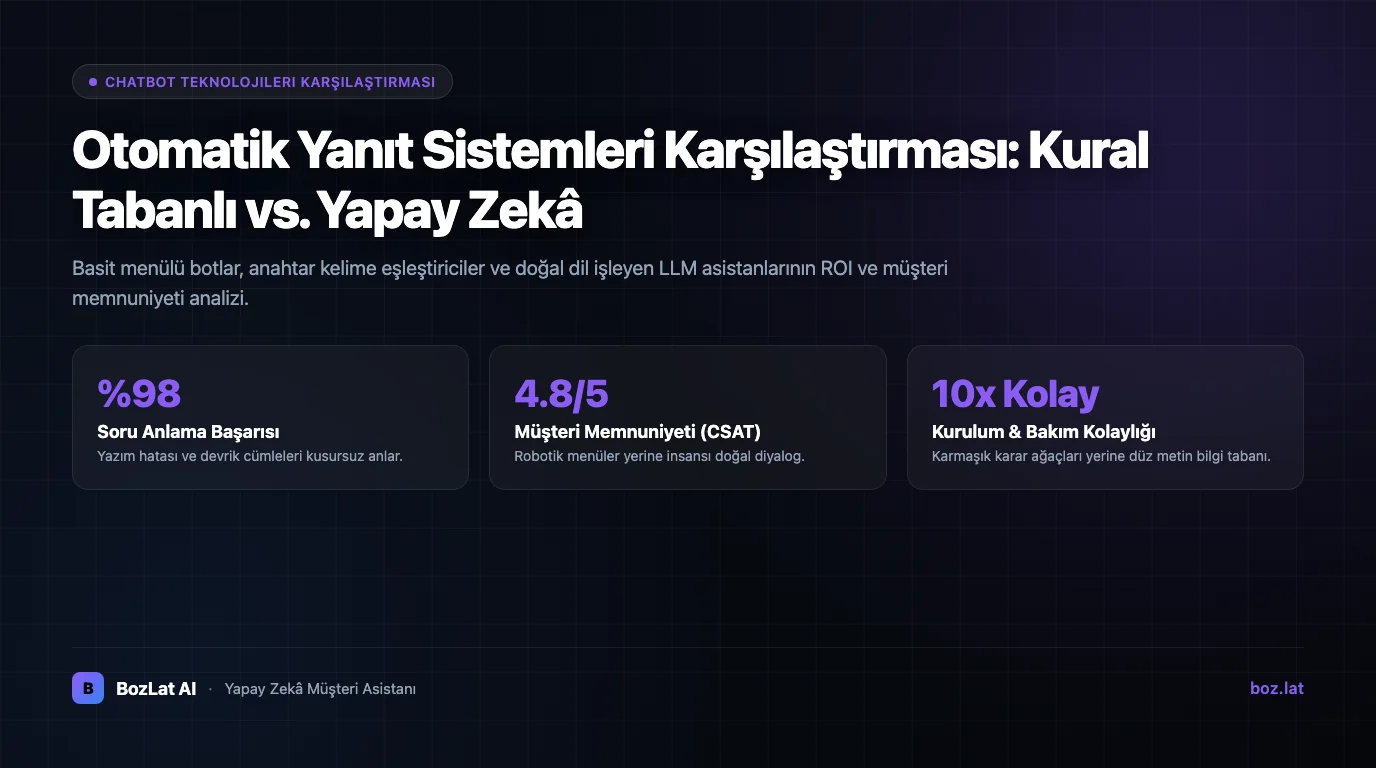
Under the broad umbrella of “automated response systems,” fundamentally different technologies are sold at wildly varying price points: Static away messages, legacy menu-driven decision tree bots (“Press 1 for Sales, 2 for Support”), and modern generative AI (LLM) conversational agents that understand customer context. Selecting the wrong layer causes businesses to either alienate customers with rigid menus or pay for unnecessary complexity.
The 3 Distinct Tiers of Business Messaging Automation
| Evaluation Metric | Tier 1: Static Auto-Replies | Tier 2: Rule-Based Menu Bots | Tier 3: BozLat AI Conversational Agent |
|---|---|---|---|
| Natural Query Understanding | None (Fixed broadcast message) | Strict keyword matching or numeric menus | Full conversational NLP (Understands typos and complex syntax) |
| Multi-Intent Handling | Impossible | Fails when user strays from decision tree | Resolves queries like “How much is balayage and do you have slots tomorrow at 2 PM?” in one turn |
| Live Calendar & Order Sync | None | Rigid forms | Real-time Google Calendar and ERP booking integration |
| Knowledge Base Maintenance | Manual text edits | Complex redraws of decision tree diagrams | Drop in a new PDF or Word document in seconds |
| Customer Satisfaction (CSAT) | Low | Poor (High abandonment) | High (96%+ satisfaction with natural flow) |
Why Rule-Based Decision Trees Fail in 2026
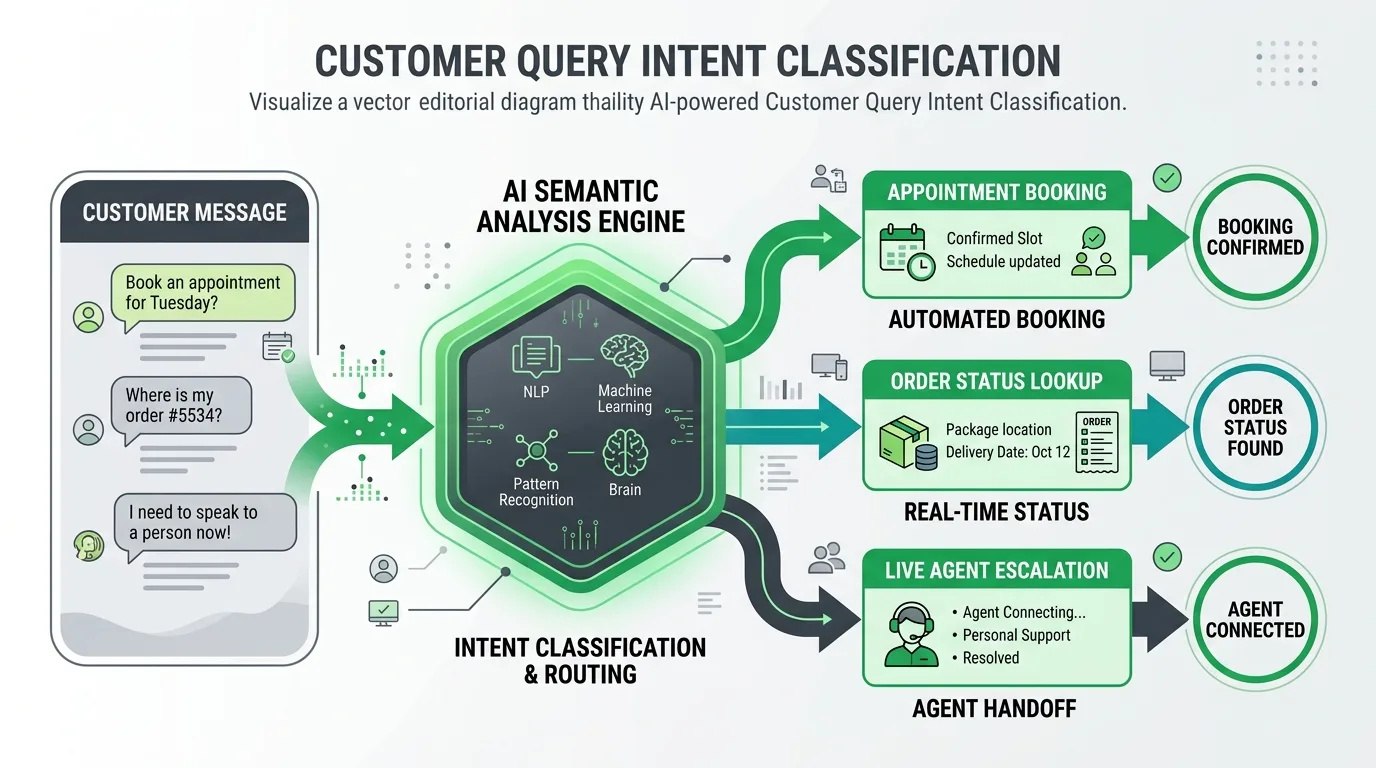
Legacy rule-based bots demand that mobile shoppers behave like software testers, navigating nested menus. In real messaging apps, users write organically: “I want to come with my sister this Saturday for haircut and coloring, what will the total be?” A menu-driven bot breaks down, returning “Option unrecognized,” driving prospective buyers straight to competitors. An AI assistant extracts every sub-intent and answers instantly.
Choosing the Optimal Automation Level for Your Business
For sole proprietors handling 2, 3 messages daily, free Tier 1 WhatsApp greetings are adequate. However, for organizations processing 10+ daily inquiries, managing scheduling, or offering multiple services, Tier 3 AI automation immediately turns abandoned queries into captured revenue.
Quantify customer loss from robotic menus with our revenue loss model, and review human-AI operational synergy in our secretary comparison guide.
Frequently Asked Questions
Related Articles
7 min read
Form and Booking Collection with WhatsApp Flows
What is WhatsApp Flows? A guide to creating rich interactive forms, appointment, and booking screens directly inside WhatsApp chat.
8 min read
Instagram DM Automation: Setup, Permissions and Sales Guide
How do you set up Instagram DM automation? Messaging API permissions, account connection steps, sales conversion flows and common mistakes in one guide.
7 min read
Click to WhatsApp Ads Setup and Conversion Tracking
How to set up Click to WhatsApp (CTWA) ads? Meta Ads Manager configuration, default message setup, and tactics to increase conversion rates.
Ready to set up an AI assistant for your business?
View Pricing