August 17, 2026 · 6 min read
A Reminder Rhythm That Reduces No-Shows: When, How Often, What to Write
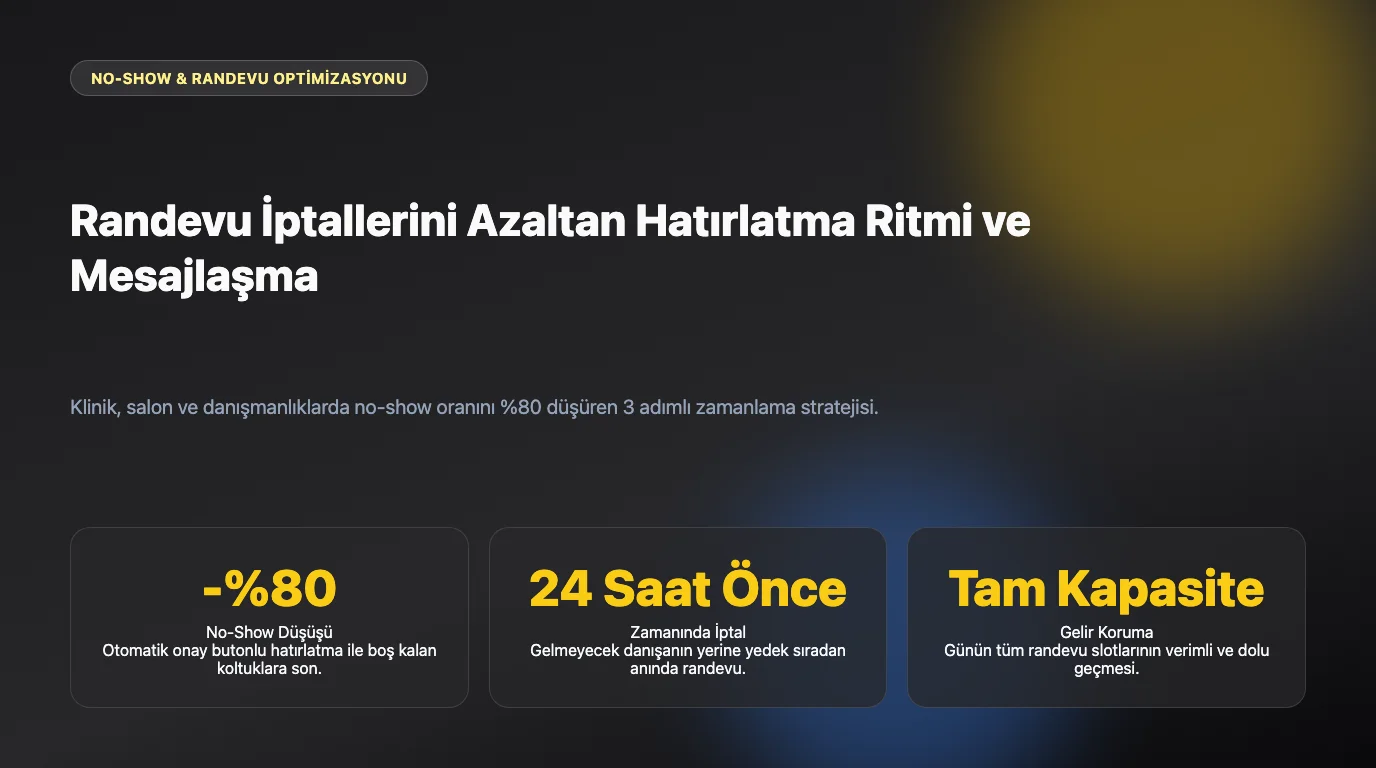
Every appointment-based business shares the same silent cost: the customer who does not turn up. The chair stays empty, staff wait, and nobody else could book that slot. Most of this loss comes from forgetfulness rather than bad intent, and forgetfulness is fixable with a few well-timed messages.
How many reminders?
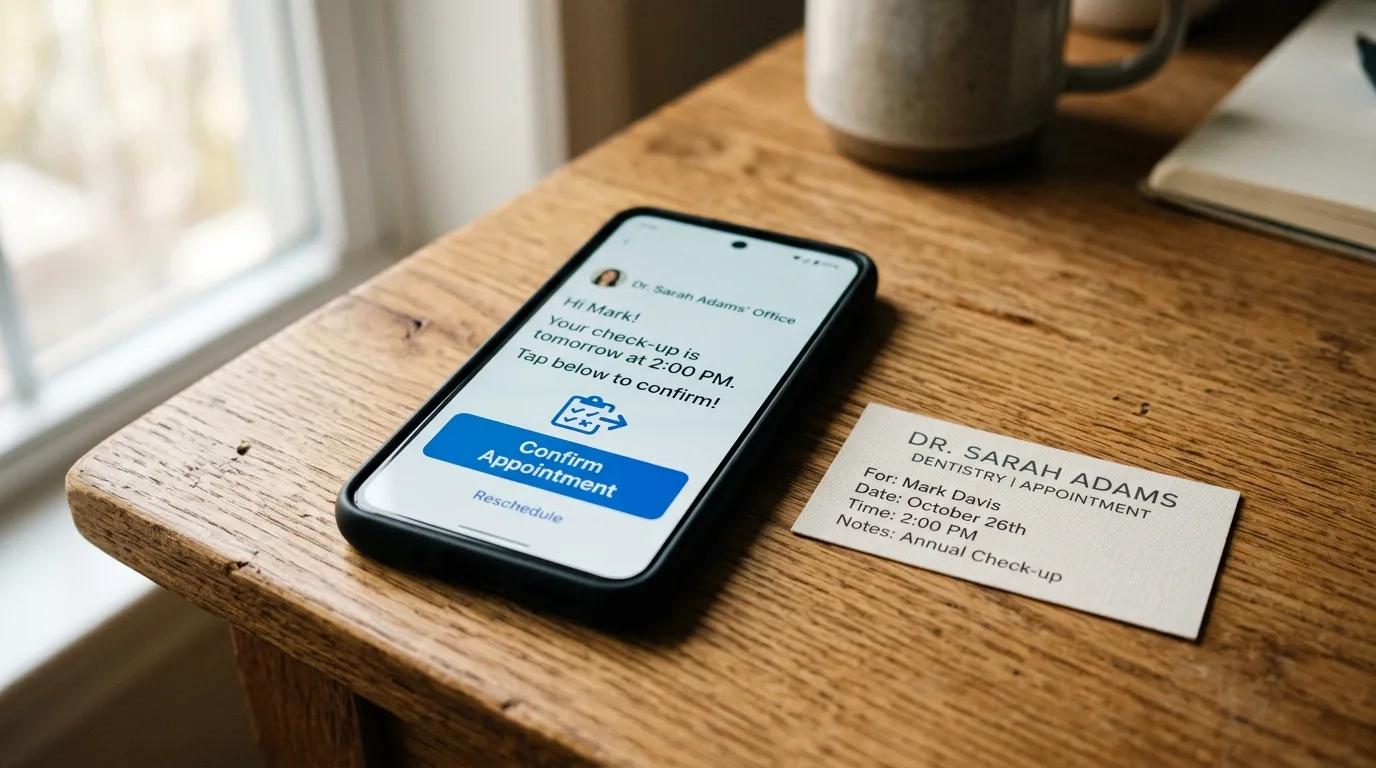
One reminder is usually too few, four is too many. A three-touch rhythm strikes the balance for most businesses: confirmation at booking, a reminder the day before, a short note on the day.
| Timing | Purpose | What the message does |
|---|---|---|
| At booking | Confirm the record | Date, time, address and duration in one message |
| One day before | Remind and catch cancellations early | Ask them to tell you now if anything changed |
| Morning of the appointment | Final confirmation | One short line with directions |
Why timing matters so much
A reminder sent a day ahead makes a cancellation valuable to you: there is still time to refill the slot. The same message two hours before is useless, because the slot can no longer be filled.
How to write it
- Write the date and time with the weekday: "Thursday, 21 August, 2 pm".
- Ask a single question: "Does this time still work?" Make it easy to answer.
- Make cancelling easy. Making it hard does not prevent cancellations, it produces silent no-shows.
- Include the address and a directions link; "where are you" is among the most common questions.
- If preparation is needed (come fasting, bring documents), put that sentence in the reminder.
What to do when a cancellation arrives
This is where the gain is. A business that offers the freed slot to someone on the waiting list turns loss into opportunity. Three things are needed: knowing who is waiting, being notified when a slot opens, and delivering the offer quickly. An AI assistant can run all three automatically.
Common mistakes
- Three reminders on the same day: it annoys people and gets you blocked.
- Email only: it cannot match the read speed of messaging channels.
- Hiding the cancellation option: a no-show costs far more than a cancellation.
- Turning the reminder into an ad: squeezing a promotion into it breaks the message's job.
A quick calculation
If a business with 10 daily appointments has a 15% no-show rate, that is 1.5 empty hours a day. At an average of 500 TRY per appointment, the monthly loss is around 22,500 TRY. The figure varies by sector and pricing; run it with your own numbers and the payback of a reminder rhythm becomes obvious.
Building a reminder system is a matter of discipline rather than technology. Set the three-touch rhythm, write the texts correctly once, and let automation handle the rest.
Frequently Asked Questions
Related Articles
6 min read
Multi-Branch Business WhatsApp Routing System
How to route WhatsApp messages based on location and district for multi-branch retail, clinic, or restaurant networks.
7 min read
WhatsApp Template Rejected? Reasons and Fixes
Why was your WhatsApp message template rejected? Policy, formatting and category-related rejection reasons, plus how to get approved on the first try.
6 min read
WhatsApp Quality Rating, Messaging Limits and Bulk Sending
How is WhatsApp quality rating calculated, how do messaging limits scale, and how is bulk messaging sent compliantly? Limit tiers and risk management explained.
Ready to set up an AI assistant for your business?
View Pricing