October 25, 2026 · 12 min read
Instagram DM Group Booking Flow for Pottery Studios
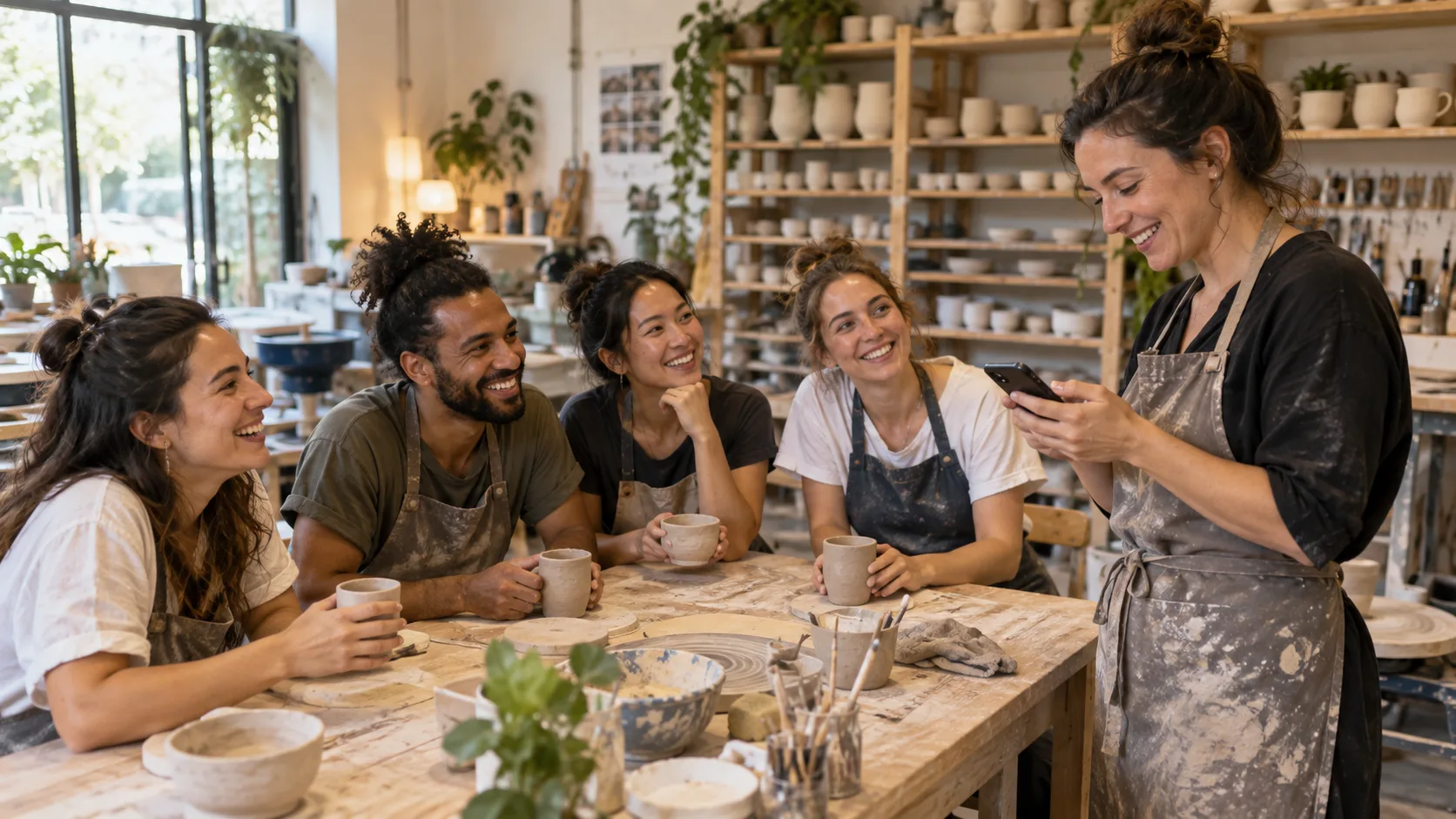
A team organiser sees ceramic cups on Instagram and asks about price and availability for an eight-person birthday event. Group size is clear, but age range, experience, technique, session duration, firing, collection and access requirements remain unknown. This guide shows pottery studios how to turn the DM into a group-event brief that sales and production staff can verify, without rushing the conversation into a fixed booking.
What commercial decision should the first DM prepare?
The first exchange does more than find an open hour. The studio needs to determine whether the request is for places on a public class, a private group, a corporate team event or a celebration. It then evaluates format, capacity, tutor, workspace and production schedule. The assistant may collect preferred days, while a studio owner confirms current capacity and scope before the booking becomes final.
Why separate the event purpose from the object?
A birthday, team gathering or friend event is the social context. A cup, plate, hand-building project or painting session defines production scope. One group may prioritise conversation, technical learning or collecting a finished object. Ask about the purpose first and the desired outcome next. A sample piece shown on social media must not automatically be presented as available for every date, group and format.
| Booking field | Customer input | Studio verification |
|---|---|---|
| Group | Participant count and age range | Space and supervision suitability |
| Format | Purpose and preferred activity | Technique, materials and duration |
| Schedule | Date and time ranges | Tutor, table and production capacity |
| Collection | Pickup or delivery preference | Firing and readiness plan |
How is participant count collected reliably?
If the exact number is not known, record a minimum, expected count and upper limit separately. Distinguish active participants from people who only accompany them when relevant. The studio reviews age range, responsible adults for children and any space requirements for safe operation. The flow should not request unnecessary identity data. If a participant list is required, make its purpose, owner and last-update point clear.
Which workshop format should be selected?
Hand-building, wheel experience, bisque painting and surface decoration require different equipment, time and teaching attention. Present understandable options from the current studio catalogue. Do not promise an advanced technique to a beginner group or guarantee the exact result shown in a photograph. Verify format against group size, age, experience, purpose and the studio's available materials and equipment for that date.
Why is experience a group profile rather than one label?
A group may include people touching clay for the first time and others who make ceramics regularly. Instead of collecting a detailed history for every participant, ask for the overall distribution and any known support need. The tutor should not assume one pace. Mixed experience can shape sample pieces, activity choices and assistance. The assistant does not assess skill; it transfers the group's own description to the studio.
Is capacity only a chair count?
No. Work surfaces, wheels, aprons, tool kits, water points, drying space, tutor ratio and accessible circulation all affect capacity. Eight empty chairs do not prove that eight wheels are available. Cleaning and reset time is also needed between events. The booking system should read seating and production capacity from separate current sources rather than treating an old social post as today's room plan.
How should date and time choices be offered?
The DM flow can collect first, second and third preference ranges. Setup, welcome, making, clearing and cleaning should be planned separately from the advertised activity time. Explain the studio rule for late arrival or a session that runs over. The assistant must not confirm as soon as it sees a calendar gap; tutor, space, equipment and downstream production work all need to be available together.
How are firing and collection expectations managed?
A ceramic piece is not always ready to use when the event ends. Drying, bisque firing, glazing and glaze firing vary with the chosen format. Automation should not invent a fixed readiness date. It explains the estimate from the current studio process and the natural limits of clay, including possible cracking, breakage or colour variation. A responsible person verifies pickup, group delivery or individual distribution options.
How should price, deposit and cancellation be discussed?
Per-person fees, private-group minimums, materials, firing, refreshments, additional tutors, packing and delivery may be separate items. The assistant must not calculate an unapproved total from an Instagram image or headcount. A current price source should show inclusions and exclusions. Present deposit, number-change, cancellation and rescheduling terms before booking; apply the price-question guide where information is incomplete.
What are the technical limits of Instagram automation?
Meta's official Instagram messaging guide describes requirements such as a professional account, relevant permissions, connected assets and message access. A comment, story reaction and direct message do not share identical context. Before launch, test first contact, media, delayed replies, disconnection, permission loss and human transfer with a real professional account. The Instagram DM automation guide covers the broader channel approach.
How should participant data be protected?
Limit the organiser's name, contact details, participant count and necessary access notes to the booking purpose. Do not request unnecessary health details or information about children. The authority's processing principles support specified purpose, proportionality and limited retention. Permission to share event photographs should be managed as a separate preference and process from the reservation itself.
What should pass to the studio owner?
The summary includes event purpose, group size, age range, experience mix, format preference, date options, space and support needs, price expectation, collection preference and open questions. Customer statements and studio approval remain separate. The human handoff guide transfers responsibility, while the knowledge-base guide keeps format, capacity, price and collection sources current.
Which group requests belong in the pilot?
- Say eight people without an age range or format; the flow should ask for the missing distinctions.
- Send a wheel video from social media; identical format and capacity must not be guaranteed.
- Request next-day collection; the firing process must not become an invented fixed date.
- Increase participant count later; table, equipment and tutor capacity need fresh verification.
- Decline sharing event photographs; the booking should continue without penalty.
Do not measure success only by conversion from DM to payment. Track fields the owner asks again, headcount changes, incorrect format matches, capacity conflicts, collection expectation gaps and rescheduling. Brief readiness should rely on required fields tied to identified sources. Feed human corrections into question order and the knowledge base, and state event type and reporting period in the results.
What can BozLat do in a pottery studio flow?
BozLat can structure group, purpose, format, experience, date, collection and price expectations from Instagram DM, expose missing information and pass a sourced summary to the studio owner. Safety, format suitability, equipment capacity, fixed price, deposit, production timing and booking approval remain with the studio. Explore the approach in services and compare options on the pricing page.
Which group-booking mistakes occur most often?
Common mistakes include using headcount as the only capacity measure, treating a social sample as a current catalogue, omitting setup time, guaranteeing firing completion and tying photo permission to the booking. Ignoring mixed experience within the group also weakens the session plan. The flow should use current format, capacity and policy sources, leaving unverified details as questions for the accountable person instead of completing them without evidence.
Frequently Asked Questions
Related Articles
9 min read
Instagram DM Project Intake for Exhibition Stand Teams
Structure exhibition stand enquiries by event, space, goals, brand files and installation timing in Instagram DM while specialists retain technical approval.
9 min read
Instagram DM Wholesale Sample Intake for Coffee Roasters
Qualify wholesale coffee sample requests by venue, usage, equipment and taste preferences in Instagram DM while leaving product matching to cupping experts.
9 min read
Instagram DM Print Quote Intake for Commercial Printers
Collect size, quantity, stock, colour, finishing and delivery details through Instagram DM, then prepare a production-ready print quote brief for your team.
Ready to set up an AI assistant for your business?
View Pricing