September 15, 2026 · 9 min read
Cold Storage Service Fault Intake through WhatsApp
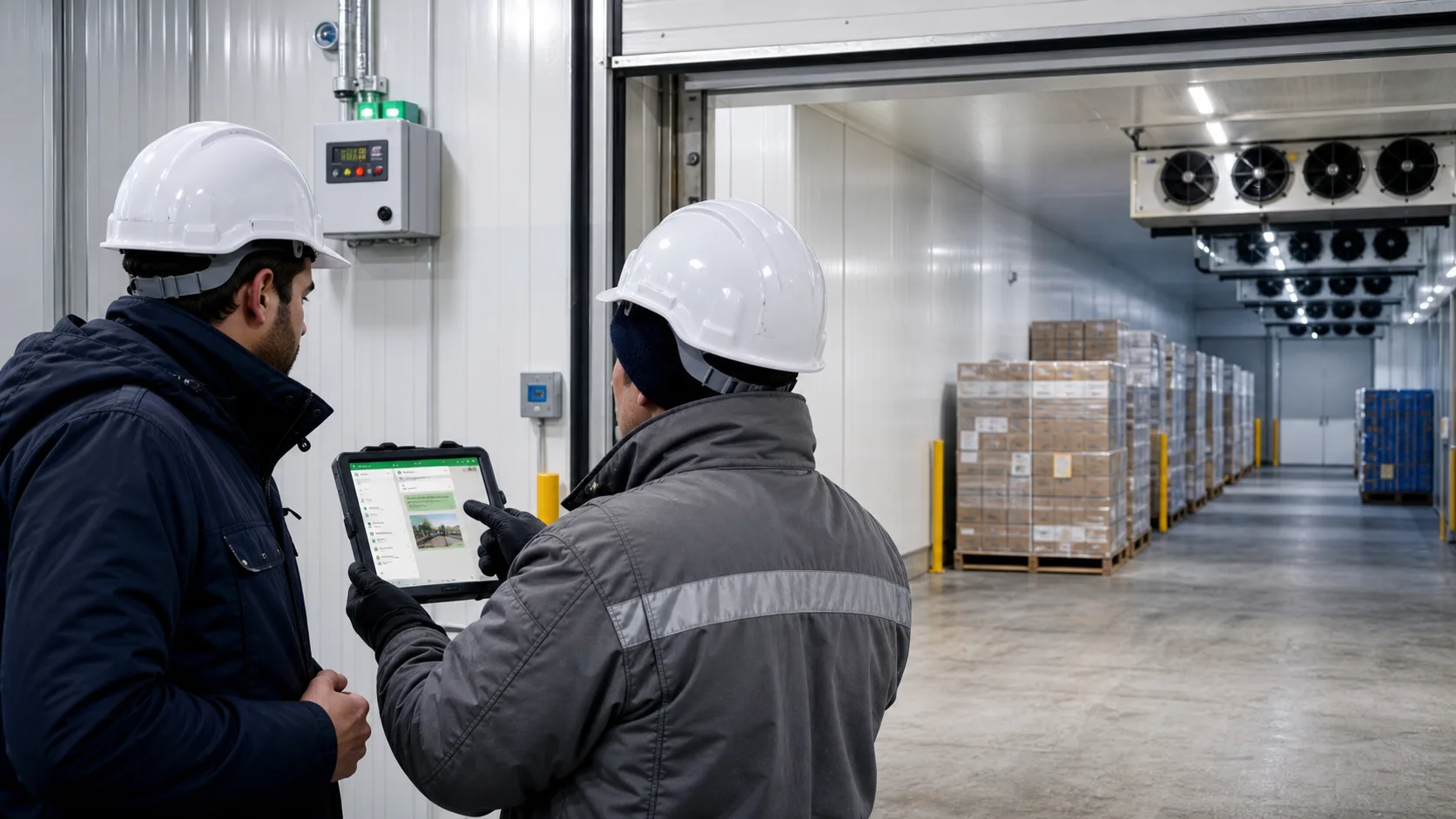
A message saying that cold-room temperature is rising and service is needed immediately is high priority, but does not give a technician enough context. The room, product context, target and observed temperature, alarm, equipment, start of the change and site access all matter. The WhatsApp assistant must not diagnose remotely or make safety decisions. It should provide approved initial guidance and prepare a source-aware fault record for the service team.
Put People and Product Safety First
Never instruct a customer to open an electrical panel, touch a refrigerant line or work on equipment without protection. When there is a risk to people, smoke, burning smell, unusual noise or suspected major product loss, prioritise the approved emergency procedure and qualified human support. The assistant may relay only safety steps pre-approved by the business.
Collect Ten Core Fields for Fault Intake
| Field | Example | Service purpose |
|---|---|---|
| Facility | Warehouse and branch | Dispatch team |
| Room | Frozen, chilled or dispatch | Priority |
| Product | Class and sensitivity | Business decision |
| Target | Approved setpoint | Deviation context |
| Reading | Current value and source | Comparison |
| Trend | When it began rising | Fault timing |
| Alarm | Code and frequency | Technical clue |
| Equipment | Label, model and unit | Expertise and parts |
| Actions | Who did what | Safe handoff |
| Access | Authorised contact and hours | Site plan |
Product temperature, air temperature and a controller display are not interchangeable. Record the source explicitly and never merge different readings into one number. Obtain the target value from the facility's approved procedure rather than a generic internet answer.
Treat Photos and Alarm Codes as Evidence, Not Diagnosis
Controller screens, alarm codes, equipment labels and room views help technicians prepare, but cannot establish the cause alone. Attach date and equipment identity to every photo. Keep room and unit identifiers separate so images from multiple systems at one facility are never mixed.
Separate a Temperature Trend from One Display Value
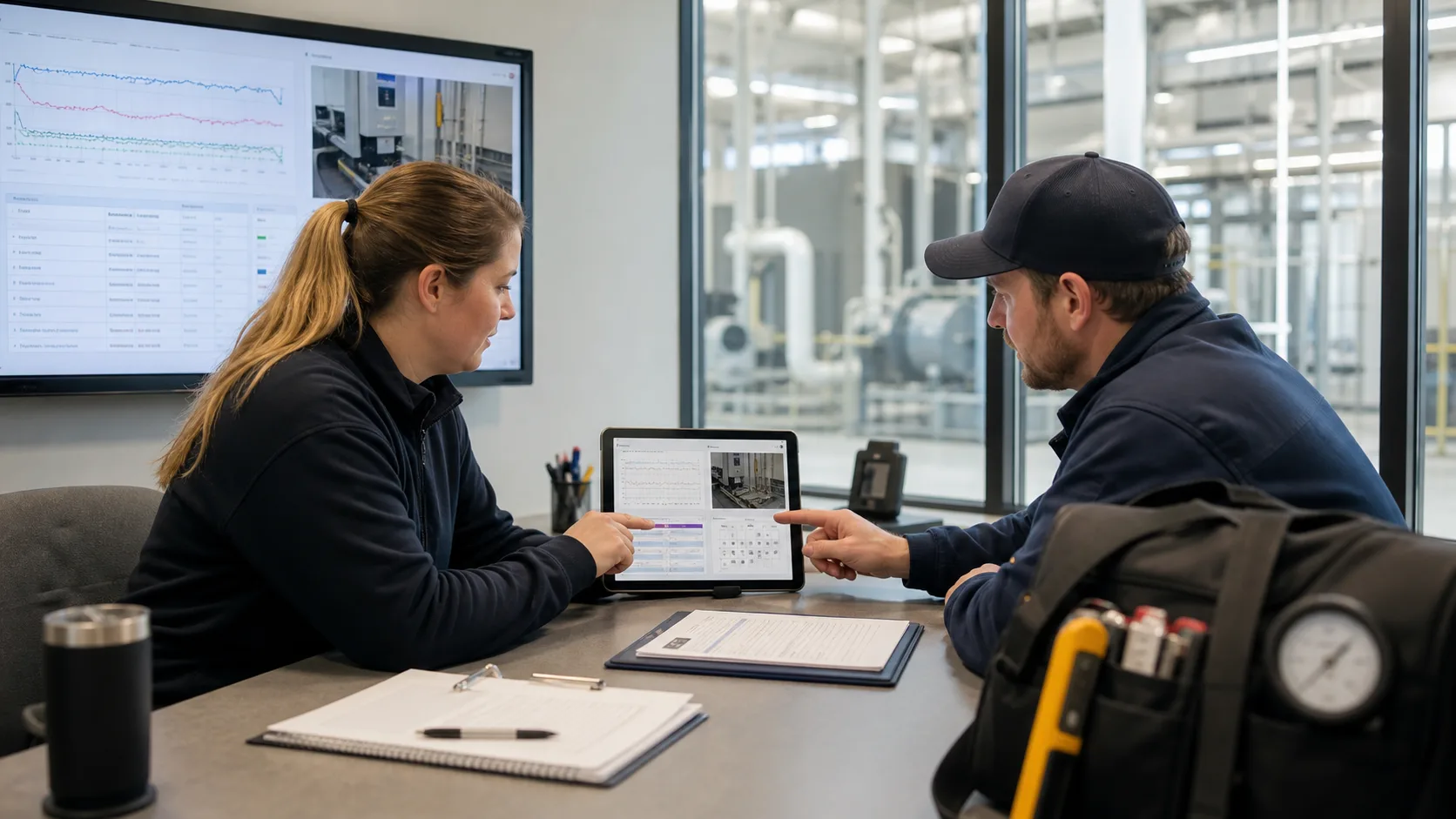
One high reading may follow door opening, loading, sensor position or a real system fault. Request the last normal value, start of the change, door activity and available trend record together. The assistant must never interpret a graph as proof that product is safe.
Limit Remote Actions to an Approved Checklist
Share only controls authorised by the facility that require no risky equipment intervention, such as confirming room identity, photographing the display or keeping the access area clear. Do not describe electrical resets, valves, refrigerant, panels or protection-circuit work in an automated message.
Separate Product Decisions from Service Decisions
Technicians assess equipment. Decisions to accept, quarantine, move or dispose of product may belong to the facility's quality and food-safety procedure. The assistant should not infer product suitability from a temperature message. Keep the responsible quality contact and record chain visible in the case.
Assign Service Priority before Choosing a Time Slot
The first empty calendar slot is not the right answer for every case. Active deviation, backup systems, product sensitivity, room size, equipment type and access change priority. Approved rules may suggest a case class, but a human coordinator should make the dispatch decision.
- Verify the authorised site contact.
- Record entry and safety conditions.
- Match equipment labels and alarm images to the correct room.
- Tell the technician which measuring and protective equipment may be required.
- Do not promise an unverified arrival or repair duration.
Limit Personal and Operational Data
A fault record does not require a complete employee list or detailed facility security plan. The KVKK's official general principles page requires data to be relevant, limited and proportionate to its specified purpose. Restrict contact and access notes to authorised service staff.
Separate WhatsApp Service Messages from Marketing
Reporting a fault is not consent to future campaigns. Manage service requests, status updates and marketing permission as distinct records. Recheck the implementation against Meta's current WhatsApp opt-in documentation and the business's legal review.
Give Technicians a Source-Aware Handoff
The summary should contain facility, room, product context, target and measured values, trend, alarm, equipment, photos, safe checks and access. Label customer statements, controller displays, sensor logs and system inferences separately. Never collapse conflicting readings into one conclusion.
See our live-agent handoff guide for the general service pattern and the pricing page for WhatsApp scope. Starting with one facility and a defined equipment family is safer.
Test Critical Cases before Launch
- Confirm that smoke or burning smell routes directly to a person.
- Prevent product-safety conclusions from one display value.
- Ensure a photo from the wrong room never enters the case.
- Never provide reset instructions to an unauthorised person.
- Verify that backup-system status changes priority.
- Prevent diagnosis or repair-time promises after human handoff.
Cold Storage Fault Intake with BozLat AI
BozLat AI can collect alarms, temperature trends, equipment and site context gradually through WhatsApp, transfer safety-sensitive cases to people and create a source-aware summary for technical service. It does not diagnose remotely; it helps the right specialist arrive with the right preparation.
Frequently Asked Questions
Related Articles
10 min read
WhatsApp Event Quote Automation for Catering Companies
Collect wedding and corporate event requirements through WhatsApp, then turn guest count, menu and operational details into a clear catering quote.
9 min read
Property Manager WhatsApp Maintenance Request Automation
Turn resident maintenance messages into structured jobs, route them to the right team and keep people informed without losing requests in busy WhatsApp threads.
9 min read
Web Chat Fault Intake for Professional Boiler Services
Classify boiler service requests safely through web chat, then turn model, symptom and address details into an appointment with the right technician.
Ready to set up an AI assistant for your business?
View Pricing