September 5, 2026 · 9 min read
After-Hours Emergency Messages for Apartment Managers
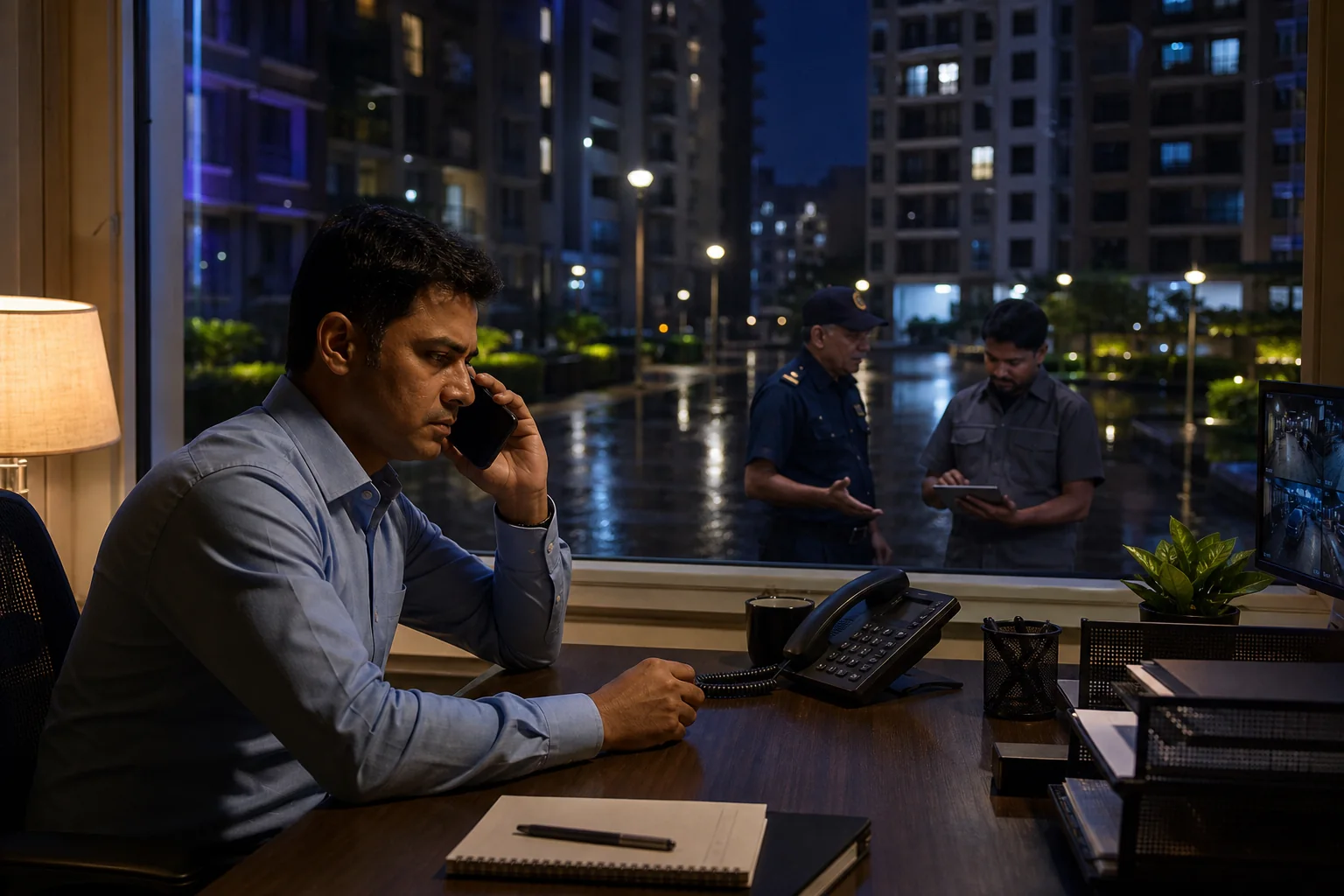
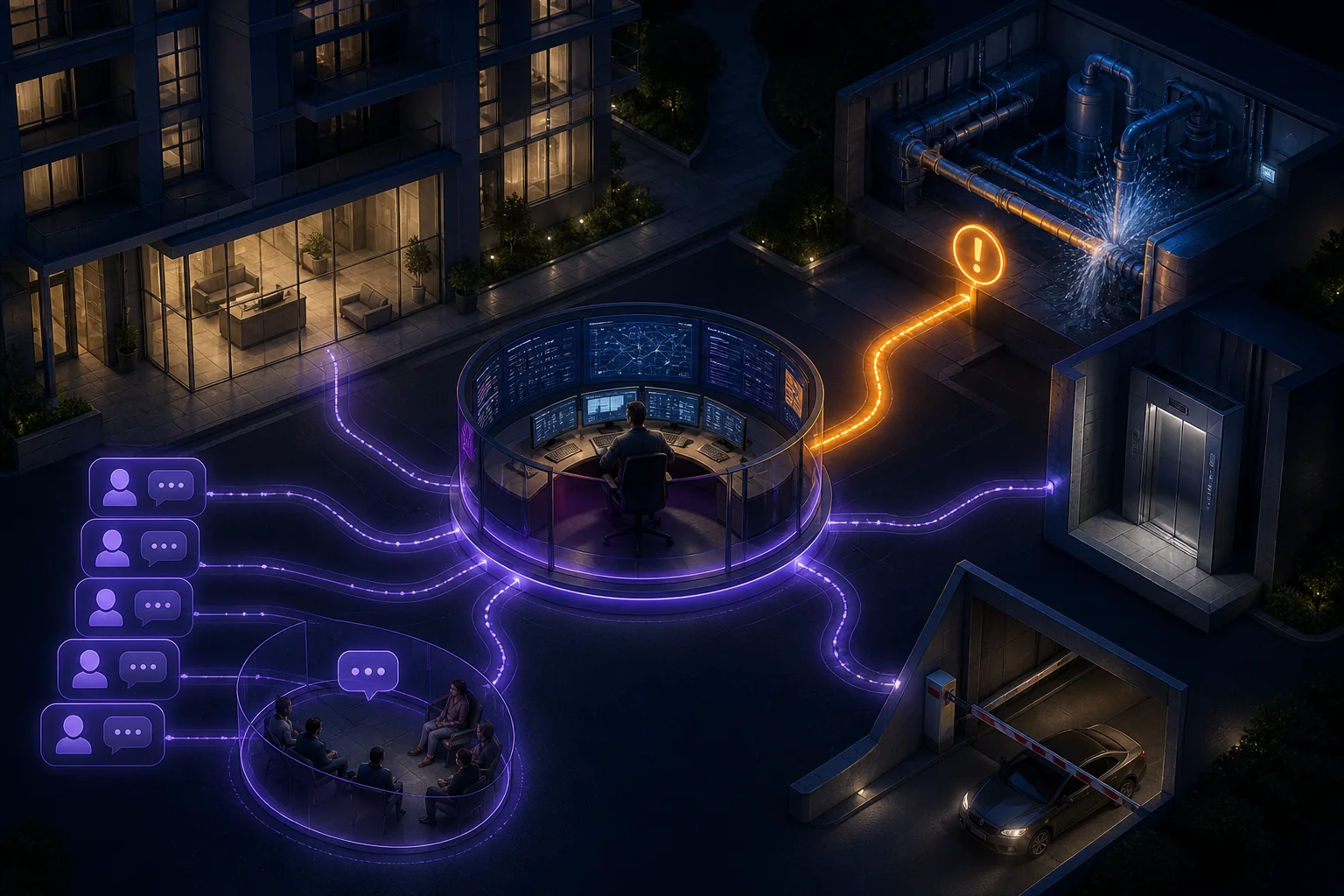
An after-hours messaging flow for apartment management does not give every night-time report the same reply. It runs a short safety and impact check first. Potentially urgent situations move to an on-call human without delay; routine requests enter the morning queue without being lost; and residents know who will respond and when. The central design rule is simple: automation should not attempt to solve an emergency. It should reduce the time required to reach the right person.
Look for Conditions, Not the Word Emergency
Residents describe the same event in different ways. One person may report a serious water flow without writing “urgent,” while another labels a corridor light as an emergency. Classification cannot depend on one keyword. The flow should ask whether the incident continues, whether anyone's safety may be affected, how much of the building is involved and whether waiting could increase the damage.
Questions must stay short. Language about smoke, burning smells, entrapment, uncontrolled water or an active security threat should stop the long intake flow. Capture the location and callback contact, then alert the on-call human. Where appropriate, residents should see a management-approved instruction to contact local emergency services directly.
Build a Three-Level Night Queue
| Queue | Typical example | Night-time behavior |
|---|---|---|
| Immediate human assessment | Entrapment, smoke, rapidly spreading water or active security risk | Alert the on-call person and the defined emergency chain at the same time |
| Prompt response | Locked shared entrance, outage in one block or barrier preventing access | Assign an owner, state the response target and escalate to backup if unaccepted |
| Morning plan | Light bulb, paint, routine cleaning, noise record or improvement request | Capture the request and explain the morning review window |
Every building must adapt these examples to its own risk assessment. Automation does not replace public emergency services. Management must define who is on call, when external services should be contacted and which backup channel applies when the system itself is unavailable.
The First Reply Should Reduce Uncertainty
The worst after-hours experience is not knowing whether anyone received the message. The first response should say three things clearly: the report was received, which information is needed now and what happens next. Avoid a vague promise such as “we will respond as soon as possible.” State only a process you can execute, such as, “This report is being sent to the night-duty manager; if it is not accepted within ten minutes, the backup will be alerted.”
Be honest with routine work as well. If no maintenance team is available at night, do not pretend otherwise. Explain the morning review window and merge any new resident detail into the same record. Clear expectations are safer than the appearance of instant service.
Do Not Make the Escalation Chain Depend on One Person
A duty system built around one phone number fails when that person is asleep, has the phone muted or is on leave. Define a primary person, backup person, response time and final fallback for every level. The system should not only send the alert; it must track whether someone accepted responsibility. If no acceptance arrives, it moves to the next person.
- Primary on-call person: sees the alert and accepts ownership.
- Backup on-call person: receives the case when the primary does not accept it in time.
- Specialist service: elevator, electrical, water or security support called according to contract.
- Management handover: the incident, actions and remaining work appear in one morning record.
- System fallback: a phone number and physical procedure exist if WhatsApp or the automation is unavailable.
Send Context with the Human Handoff
Do not make residents retell the story at midnight. The on-call summary should include location, incident, start time, current condition, affected area, media supplied and any guidance already sent. It must not present the bot's guess as fact. “Resident reports water spreading quickly across the kitchen floor” separates observation from an unsupported diagnosis such as “a pipe has burst.”
After the handoff, the assistant should step back. Sending new automated suggestions while a human is managing the incident can create conflicting instructions. The conversation returns to automation only when the operator closes it or a controlled timeout applies. Our human handoff guide covers this design in more detail.
Handle the WhatsApp Window Correctly at Night
When a resident messages at night, free-form replies can be sent inside the customer service window. Once that window closes, a management-initiated status update or next-day appointment may require an approved template. Meta's official message types page explains service versus template messages, while the template management documentation states that templates are used outside the window.
A template should not create fear or promise a repair time that has not been confirmed. The incident reference, current status, next step and human contact channel are usually enough. Management must also track which notifications residents permitted; maintenance communication permission is not a marketing permission.
Automate the Morning Handover
Even incidents resolved overnight should remain visible in the morning. One summary should show how many reports arrived, which were escalated, who accepted ownership, what remains open and what residents were last told. The daytime team does not need to reread every conversation, and promises made overnight are less likely to be forgotten.
Review false escalations too. If routine work repeatedly enters the emergency queue, the questions or thresholds are poor. If real emergencies remain routine, the problem is more serious: update the rules immediately using example conversations. The objective is not to call fewer people. It is to call the right person for the right event.
Run a Tabletop Drill Before Launch
- Prepare at least five routine, five priority and five emergency sample conversations.
- Test an unresponsive duty manager, an internet outage and a resident who provides an incomplete location.
- Confirm exactly when the assistant stops and hands control to a human.
- Check that messages do not collect unnecessary personal data or images.
- Verify that the morning summary contains open work, owner and latest status.
- Turn team objections from the drill into procedure changes rather than relying on prompt edits alone.
After-Hours Management with BozLat AI
BozLat AI can collect the first after-hours details, alert the on-call person according to management-approved thresholds and leave a structured incident summary for the next day. See our guide to managing after-hours messages for the broader strategy and the pricing page for channel and plan scope. Safe automation is not measured by how many night messages the bot closes, but by how consistently a critical report reaches a human.
Frequently Asked Questions
Related Articles
10 min read
WhatsApp Fault Intake for EV Charging Network Operators
A practical WhatsApp workflow for EV charging networks to capture station, connector, fault symptoms and safety context before technical handoff.
9 min read
Cold Storage Service Fault Intake through WhatsApp
Capture cold-storage faults safely in WhatsApp; organise alarms, temperature trends, equipment context and site access for a prepared service response.
9 min read
WhatsApp Instrument Intake for Calibration Laboratories
Collect instrument type, range, requested service and delivery conditions through WhatsApp, then give the laboratory a traceable intake summary.
Ready to set up an AI assistant for your business?
View Pricing