October 16, 2026 · 11 min read
WhatsApp Site Surveys for Kitchen Extract Cleaning
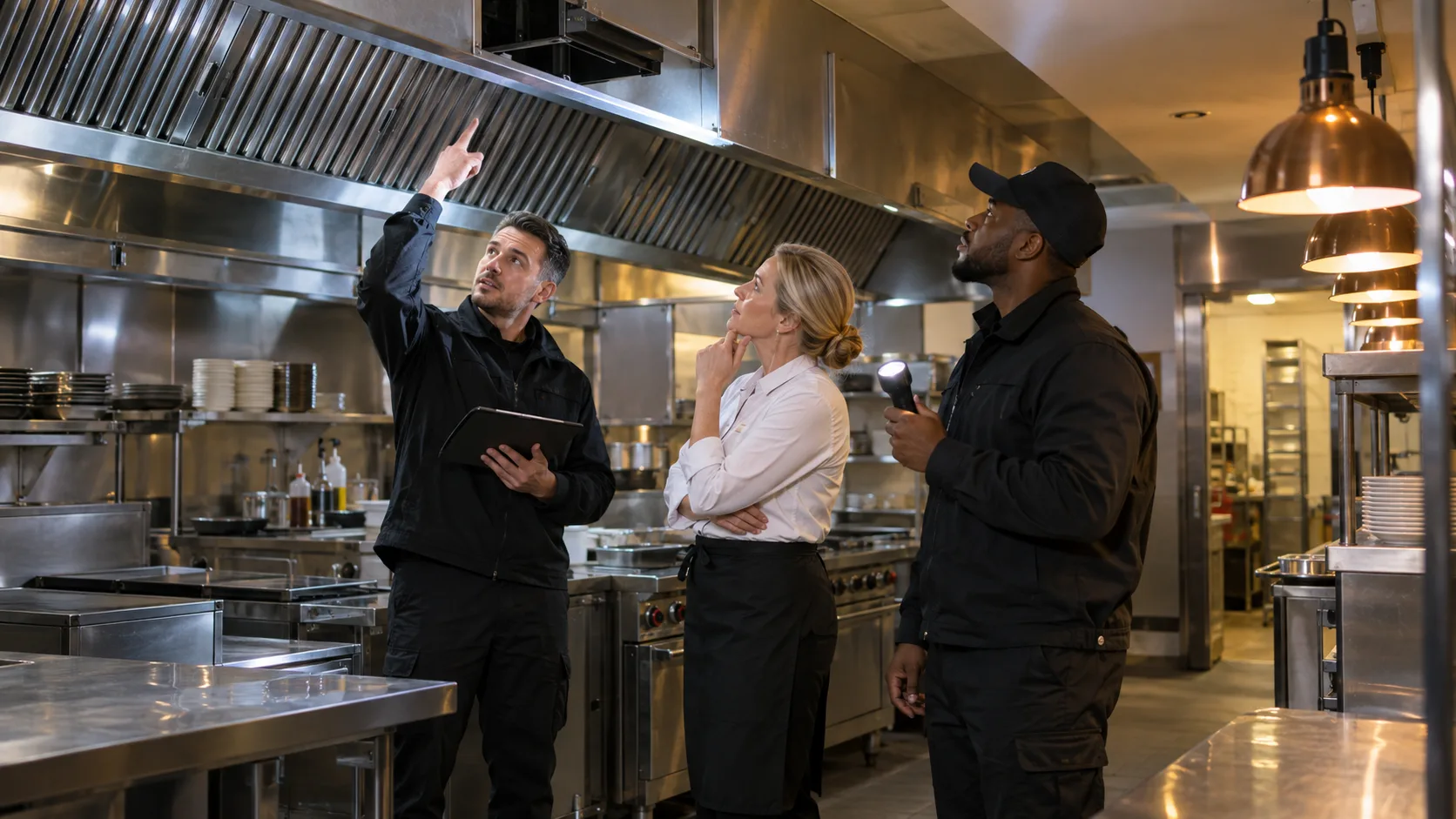
A restaurant manager asks for a hood and extract-duct cleaning price after the night shift. One photograph shows the visible filters, but not the duct route, roof access, fan area, obstructions or the time when the kitchen must reopen. Promising a firm scope or duration before these details are checked creates problems for both the operator and the field team. This guide is for small commercial kitchen extract-cleaning services that want WhatsApp to produce a survey-ready record rather than an improvised quote.
What decision should the first conversation support?
The first exchange should not select a cleaning method remotely. The service needs to establish whether the site is inside its operating area, whether a preliminary survey is necessary, which qualified person should review it and when the operator can provide access. Keep customer statements separate from questions that require field verification. At the end, the customer should understand what is missing and which check must occur before the appointment is confirmed, rather than leaving with an unsupported fixed price.
How should the kitchen and extract system be described?
Collect branch identity, kitchen use, approximate operating hours, hood count, filter arrangement, visible duct route and the customer's description of the fan location in separate fields. A system brand does not define the work scope. The positions of grills, fryers and ovens may affect site planning, but a chat assistant must not judge grease loading or fire risk from a photograph. Technical assessment remains with the service's authorised person and the record should show that boundary.
| Survey field | WhatsApp input | Field verification |
|---|---|---|
| Hood | Count and estimated length | Actual size and access |
| Duct | Visible route | Panels and internal access |
| Fan | Customer's location description | Safe access and isolation |
| Timing | Preferred closed period | Approved work window |
What boundaries belong around photo and video requests?
Customers may provide a general kitchen view, the full hood and access points visible safely from floor level. Never ask a worker to climb, remove a panel, run a fan or enter a roof area. Someone who declines images must be able to continue in text. Faces, payment documents, staff rotas and unrelated spaces are unnecessary. Images help a team prepare for a survey; they do not replace safe access checks or direct assessment of the system's condition.
Why separate equipment access from the work area?
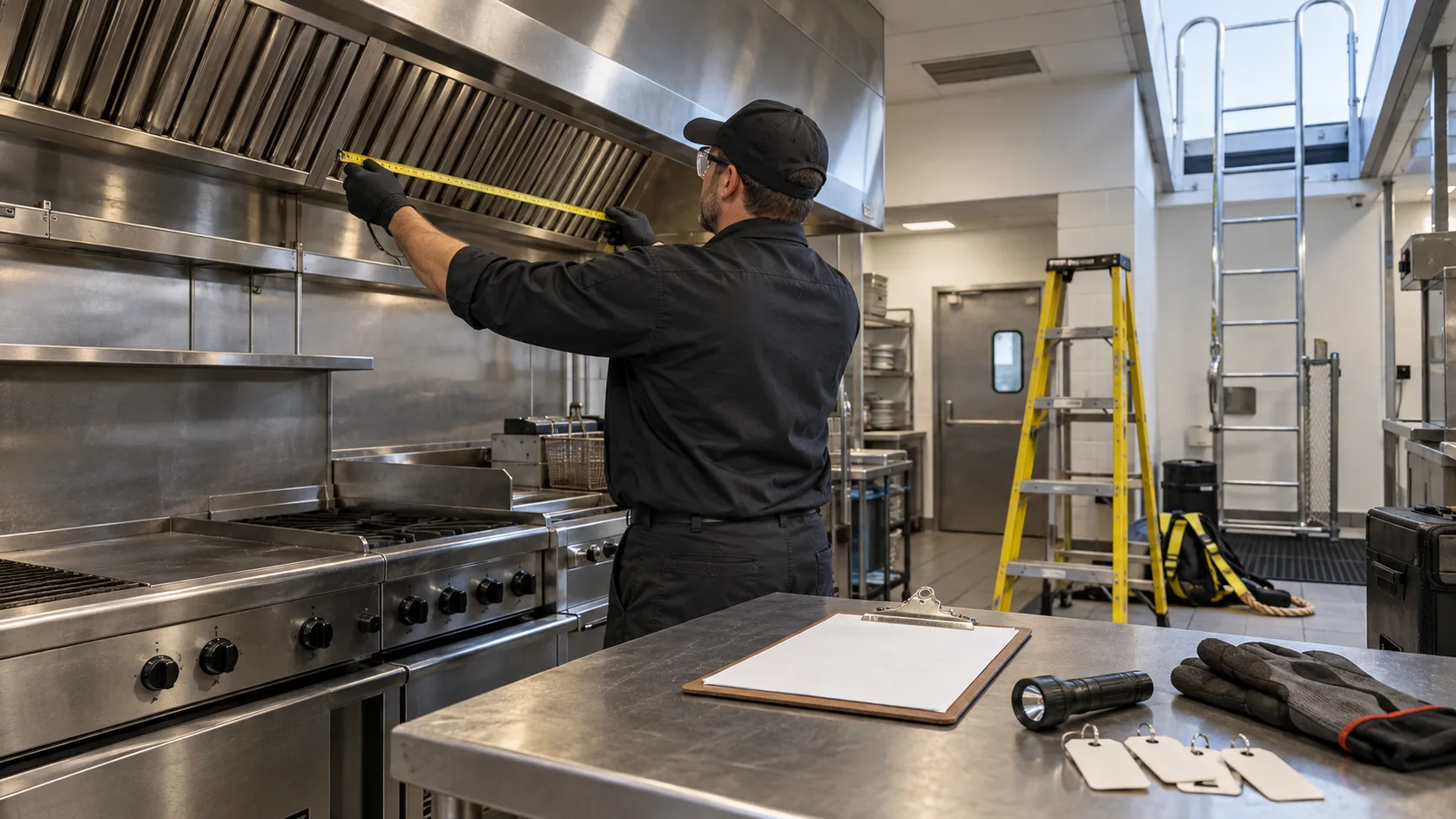
Reaching a hood is different from reaching every duct section. Ceiling finishes, fixed equipment, narrow routes, roof hatches, shared premises and staff movement can alter the plan. The assistant should not recommend access equipment or assume permission exists. Record which areas require approval from the property manager, restaurant operator or service team. An unknown section becomes a survey question instead of a pricing assumption. This distinction also helps the field team arrive with the right questions without pretending the method is already approved.
How should appointment timing fit kitchen operations?
Keep the customer's preferred date separate from the work window confirmed by the service. Last orders, safe shutdown of cooking equipment, closing the area to staff, handback and kitchen reopening are different milestones. A WhatsApp flow should not collapse them into one time. Even with a calendar connection, do not confirm the visit until capacity, site conditions and the operator's responsible contact are verified. If anything changes, the record should show whose approval is still pending.
Which items belong in the quote scope?
The preliminary record can separate hood, filters, visible duct sections, fan, access method, work hours, protection expectations and waste handling. The assistant must not declare that every item is included. A survey note should show customer requests and specialist-confirmed scope in different fields. Price, duration, team size and method come from the company's current calculation and safety procedure. Do not invent a service interval, quantity or price when an approved source is absent.
How should urgent odour or smoke reports be handled?
The conversation must not diagnose the cause of an urgent condition. If there is active smoke, a sign of fire, an electrical concern or doubt about worker safety, direct the customer to follow local emergency procedures and authorised contacts rather than holding them in a routine booking flow. Do not guarantee that cleaning will resolve an odour. Transfer the complete urgent record to a responsible human. The assistant's role is to preserve and route information, not make a technical safety decision.
What should the field-team summary contain?
Include the branch contact, kitchen use, system description, image sources, access constraints, preferred hours, open questions and approval owners. Measurements supplied by the customer must remain distinct from those a technician verifies. The human handoff guide explains how to transfer responsibility without losing context. If the service later proposes recurring work, the appointment reminder guide can support a communication plan based on the actual schedule.
How should data minimisation and retention be planned?
Contact details, kitchen images and access notes should be collected only for the defined service purpose. The authority's processing principles call for data that is relevant, limited and proportionate, and retained only as needed. The business defines access roles, retention and deletion. Do not request keys, alarm codes or unnecessary staff information in chat. Use the company's approved route for sensitive site-access details.
Which scenarios should the pilot test?
- Try enquiries with one photograph and with no images; confirm that both can progress through open questions.
- Submit a branch with unknown roof access; check that the assistant does not assume a safe route.
- Test a full calendar and a short closure period; verify that no unapproved appointment is promised.
- Report active smoke; ensure the record leaves the routine quote path for a human and emergency procedure.
- Change the scope after a survey; verify that the original customer statement remains distinct from the technical decision.
Do not define success as fewer messages alone. Track fields the field team asks again, visits delayed by access, scope changes after inspection and incorrect price expectations separately. Calculate record completeness only for requests whose mandatory fields have known sources. During early operation, use staff corrections to improve question order. If a result percentage is reported, disclose which branches and request types were included so that a shorter conversation is not mistaken for a better field record.
Where should BozLat stop in this workflow?
BozLat can structure branch, system, access, timing and visual sources from a WhatsApp conversation, expose gaps and pass a traceable summary to a human team. Cleaning method, safety planning, fire compliance, final scope, pricing and field acceptance remain with specialists. Review the channel boundaries in the WhatsApp Business API guide, explore the approach in services and see scope options on the pricing page.
How should the record close after the survey?
When the technician has visited, update the customer statement, field-confirmed scope, unresolved areas and quote owner as separate statuses. Viewing an image is not technical acceptance. If the service will not quote, record the reason and the next step communicated to the customer. A recurring plan must come from the company's real service programme rather than an automatically generated interval. The WhatsApp record then becomes an auditable decision trail instead of a loose chat archive.
What are common automation mistakes?
Estimating metres from a photograph, treating every hood as the same system, turning a requested night into a confirmed booking and leaving urgent reports in a sales flow are common failures. Another is treating staff free text as verified technical data. The knowledge base should contain the company's actual service area, exclusions, handoff criteria and approved explanations. The knowledge-base guide provides a practical framework for maintaining those limits.
Frequently Asked Questions
Related Articles
5 min read
WhatsApp Quote and Moving Appointment Automation for Moving Companies
How do moving companies manage price quote requests, moving date appointments, and moving day reminders with a WhatsApp AI assistant?
5 min read
WhatsApp Order and Special Occasion Reminder Automation for Florists
How do florists manage taking orders, same-day delivery questions, and special occasion (anniversary, birthday) reminders with a WhatsApp AI assistant?
9 min read
WhatsApp Installation Scheduling for Fleet Tracking
Plan fleet tracker installation by vehicle, location, access, downtime and technician availability in a verified WhatsApp appointment workflow.
Ready to set up an AI assistant for your business?
View Pricing