October 20, 2026 · 12 min read
WhatsApp Session Planning Guide for Recording Studios
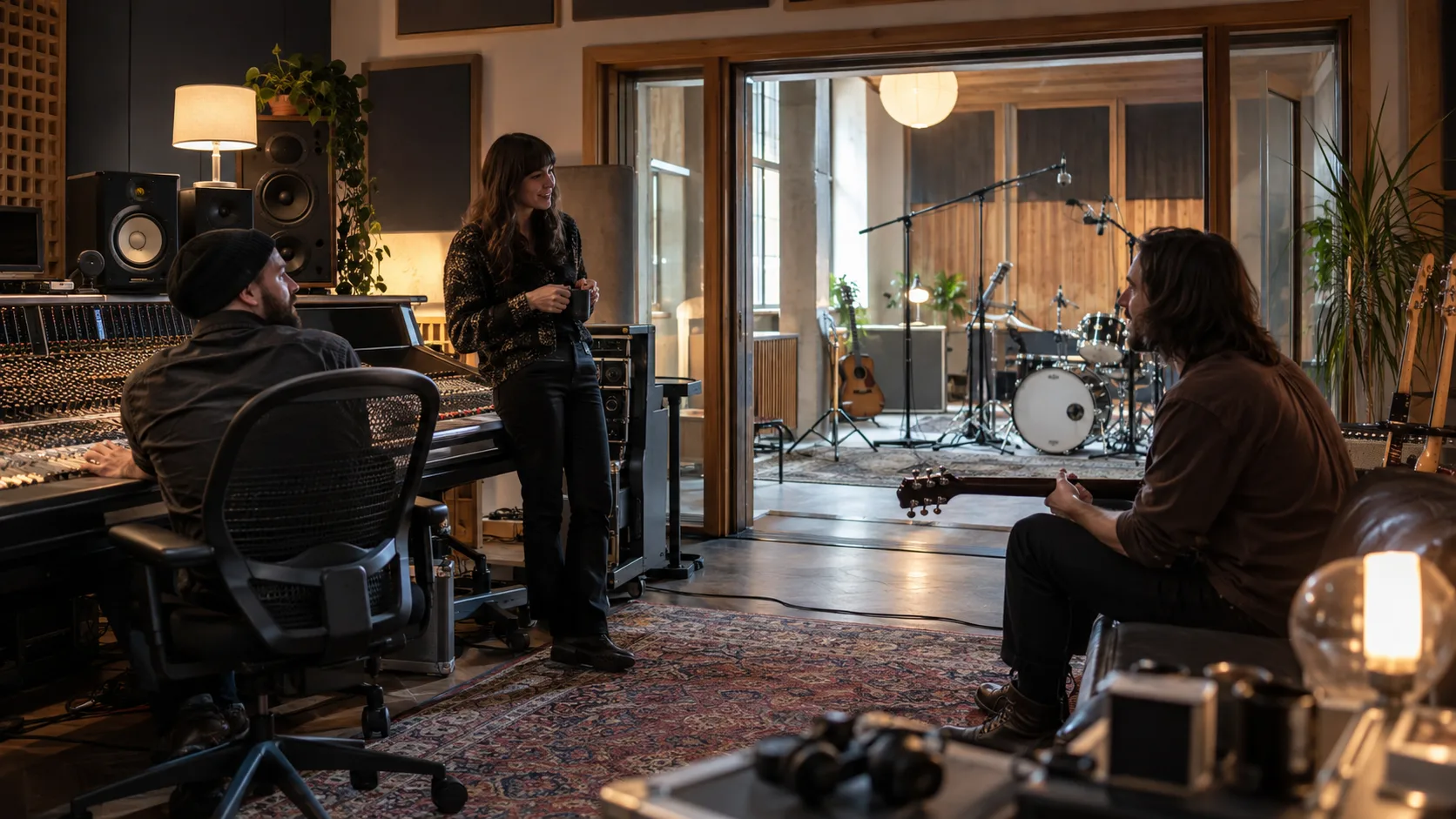
A band asks for a Friday evening recording slot, but does not say how many songs it will play, whether a drum setup is needed, how many inputs are required or which files it expects. Adding only a time to the calendar moves every uncertainty to the studio door. This guide shows independent recording studios how to collect a WhatsApp session request while keeping customer statements, technical review and confirmed booking as separate states.
What decision should the first conversation support?
The first conversation should not automatically accept the recording. The studio needs to learn whether the request is for rehearsal, live tracking, multitrack recording, vocal overdubs, a mix review or another approved service. The customer's date and duration are requests. They become a booking only after availability, technical preparation and price are reviewed by responsible staff. The customer should leave the flow knowing what is missing and which human approval comes next.
Which details belong in separate pre-session fields?
Project name, service type, song count, approximate duration, participant count, instruments, special equipment, reference files and target deliverables are separate fields. Free text is useful, but critical facts should not remain only in chat history. The source of each field should also be visible: a customer statement, the studio's current equipment list or an engineer's approval. This prevents a later change from silently appearing as a confirmed fact.
| Brief field | Customer input | Studio verification |
|---|---|---|
| Session purpose | Recording or rehearsal request | Suitable room and service |
| Crew | People and instruments | Capacity and setup |
| Technical needs | Inputs, microphones and monitoring | Available equipment and engineer decision |
| Timing | Preferred date and duration | Approved calendar and preparation time |
How should songs and session goals be defined?
Song count alone is not enough. Ask for approximate duration, whether performances will be captured live or in layers, whether guide tracks exist and what the customer expects at the end. A demo, raw multitrack files, a rough mix and a release-ready master are different deliverables. The assistant can explain these terms from the studio's approved service descriptions, but it must not make creative or production decisions for the customer.
Why should participants and roles be known early?
The number of musicians, engineer preference, producer attendance and guests affect room layout and communication ownership. Instead of collecting every person's contact details, identify one project owner to reduce unnecessary data. A participant under legal age, an accessibility requirement or a situation needing special permission should follow the studio's real procedure and transfer to a person. The assistant must not interpret legal capacity or consent requirements.
How are instrument and equipment requests verified?
Ask for instrument types, equipment brought by the customer and microphones, amplifiers, DI boxes, headphones or monitors expected from the studio. Naming a brand or model does not prove that it is available that day. The studio verifies current inventory and maintenance status. The assistant should not provide wiring, electrical intervention or risky setup instructions. Compatibility questions and faults move to the technical owner.
How should reference and session files be received?
If the studio needs a guide track, tempo information, lyric document, backing track or previous session file, show accepted formats and transfer routes from its knowledge base. A file arriving in WhatsApp is not automatically safe, readable or current. Link file name, version, sending time and owner to the project record. Use the business's approved transfer channel for large or sensitive material; chat history should not serve as the only archive.
How are session length and setup time planned?
Requested recording time is different from load-in, setup, line checks, breaks, file transfer and room reset. Automation should not turn past sessions into a guaranteed duration. It should complete the studio's required preparation fields and route the request to the calendar owner. A late arrival, added song or changed setup is shown as a change requiring renewed review, not as an assumption hidden inside the booking.
When should price discussion move to a person?
Even when an hourly or package price is published, room, engineer, equipment hire, additional staff, editing, mixing and delivery scope may differ. The WhatsApp flow must not invent fees or multiply requested hours by an unsupported total. The price-question guide helps move a conversation forward while inputs are incomplete. A final quote uses the studio's current rates and an accountable approval.
How are safety and studio rules communicated?
Sound levels, cable routes, food and drink, smoking, equipment handling and room capacity should come only from approved business text. The assistant must not provide remote instructions for electrical connections or heavy equipment placement. It does not assess hearing-health questions and transfers them to an appropriate professional. Emergency and damage reports leave the automated booking flow and reach a responsible person directly.
How are personal and creative materials protected?
Contact details, unreleased recordings and lyric files should be collected only as needed to prepare the session. The authority's processing principles require a specified purpose and data that is relevant, limited and proportionate. The studio defines access roles, retention and deletion ownership. The assistant should never recommend placing a confidential track on a public link.
What are the technical boundaries of WhatsApp?
Meta's official sending guide describes message types, media use and business-account requirements. Channel acceptance does not prove that a file is usable by the studio or that the business can freely message every customer at any time. Before launch, verify permissions, media transfer, notifications requiring templates and failure behaviour with a real test number. The WhatsApp Business API guide provides broader setup context.
What belongs in the handoff to the engineer?
The summary includes project owner, service goal, songs and duration, participants, instruments, equipment expectations, reference files, preferred date, target deliverables and open questions. Customer statements remain visually separate from studio-verified facts, and contradictions stay visible. The human handoff guide covers transfer of conversation responsibility, while the knowledge-base guide helps maintain current equipment and policy sources.
Which real scenarios should the pilot test?
- Send a band that gives only a date; the flow should ask for service purpose and lineup.
- Request an amplifier absent from the studio list; the system must not promise availability.
- Upload two versions of one backing track; the controlling file should remain an open question.
- Add songs after booking; duration and quote should return for review.
- Ask a risky electrical connection question; the flow should transfer it instead of giving instructions.
Do not measure success only by first-response speed. Track fields engineers ask again, equipment surprises on session day, wrong file versions, starts delayed by setup and topics that need human transfer. Calculate brief readiness from required fields with identifiable sources. Feed human corrections back into question order and the knowledge base. If results are reported, disclose the measured session type and period.
What can BozLat do in a recording-studio flow?
BozLat can structure session purpose, lineup, instruments, equipment, files and timing from WhatsApp, expose gaps and pass a sourced summary to the engineer. Technical suitability, creative decisions, fixed duration, price, safety and booking approval remain with people. Explore the approach in services and compare business scope options on the pricing page.
Which planning mistakes occur most often?
Common mistakes include treating a date request as a booking, confusing a band name with the project owner, deriving duration from song count, assuming requested gear is in stock and using WhatsApp files as the master archive. Another failure is explaining studio rules differently in every free-text reply. Keep approved services, equipment, file, safety and cancellation sources together. When the flow cannot verify an answer from them, it should transfer to a person instead of improvising.
Frequently Asked Questions
Related Articles
5 min read
WhatsApp Quote and Moving Appointment Automation for Moving Companies
How do moving companies manage price quote requests, moving date appointments, and moving day reminders with a WhatsApp AI assistant?
11 min read
WhatsApp Site Surveys for Kitchen Extract Cleaning
Collect hood, duct access, operating hours and site-safety details in WhatsApp so commercial kitchen extract cleaners can prepare a verifiable survey visit.
5 min read
WhatsApp Order and Special Occasion Reminder Automation for Florists
How do florists manage taking orders, same-day delivery questions, and special occasion (anniversary, birthday) reminders with a WhatsApp AI assistant?
Ready to set up an AI assistant for your business?
View Pricing