September 10, 2026 · 9 min read
WhatsApp Quote Intake for Custom Furniture Workshops

A message asking, “How much would it cost to make the same cabinet?” is the beginning of a custom-furniture quote, not the quote itself. A single reference image does not establish dimensions, material, internal layout, wall conditions or installation access. WhatsApp automation should not guess a fixed price from a photograph. It should clarify the request in stages and create a structured preliminary brief for the designer or craftsperson who owns the final decision.
Do Not Confuse a Product Photo with a Project Brief
A customer may share a kitchen, wardrobe or media-unit image found on social media. It communicates style, but it does not prove panel thickness, hardware, measurements or installation scope. Ask for the product type and intended use first, and label the image as a reference. Internal shelves, drawers, door direction and service clearances that are not visible must be confirmed separately.
When the reference belongs to another maker, identify what the customer actually likes instead of promising an exact copy: colour, surface, door style, handles or overall proportions. This moves the conversation toward an original design and makes the cost of unseen details easier to explain.
Collect Seven Core Fields for Preliminary Quoting
| Field | Information to ask | Quote impact |
|---|---|---|
| Product | Kitchen, wardrobe, entry unit or table | Production and installation type |
| Dimensions | Width, height, depth and unit | Material and labour estimate |
| Room | Space and wall reference | Layout and access check |
| Material | Carcass, door and surface preference | Cost and lead-time class |
| Internal layout | Shelves, drawers, hanging and use | Hardware and production plan |
| Installation | Floor, lift, entrance and working hours | Logistics and site duration |
| Timing | Requested delivery window | Capacity check |
Do not send all questions in one message. Confirm the product, city and rough size first, then reveal only details relevant to that job. A dining table may depend on seating and surface durability, while a fitted wardrobe depends on walls, skirting, ceiling and door clearance. Store each answer in a separate field rather than losing it inside free-form chat.
Treat Customer Measurements as Preliminary
Measurements supplied in WhatsApp are useful for screening and rough scope. They may use the wrong unit, refer to unclear points or ignore uneven floors and walls. Record them as customer-supplied information and state whether professional site measurement is required for the project type.
A measurement guide can reduce ambiguity. A fitted wardrobe may need left, centre and right heights, several widths and the position of sockets, radiators and skirting. Even then, automation should not release a production file before the authorised person confirms final dimensions.
Limit Photo Requests by Purpose and Privacy
A room photo can help with layout and installation access, but do not ask to capture the entire home, people or unrelated possessions. Explain why an image is needed and who can see it. Offer sketches, written dimensions or an on-site survey to customers who do not want to share media.
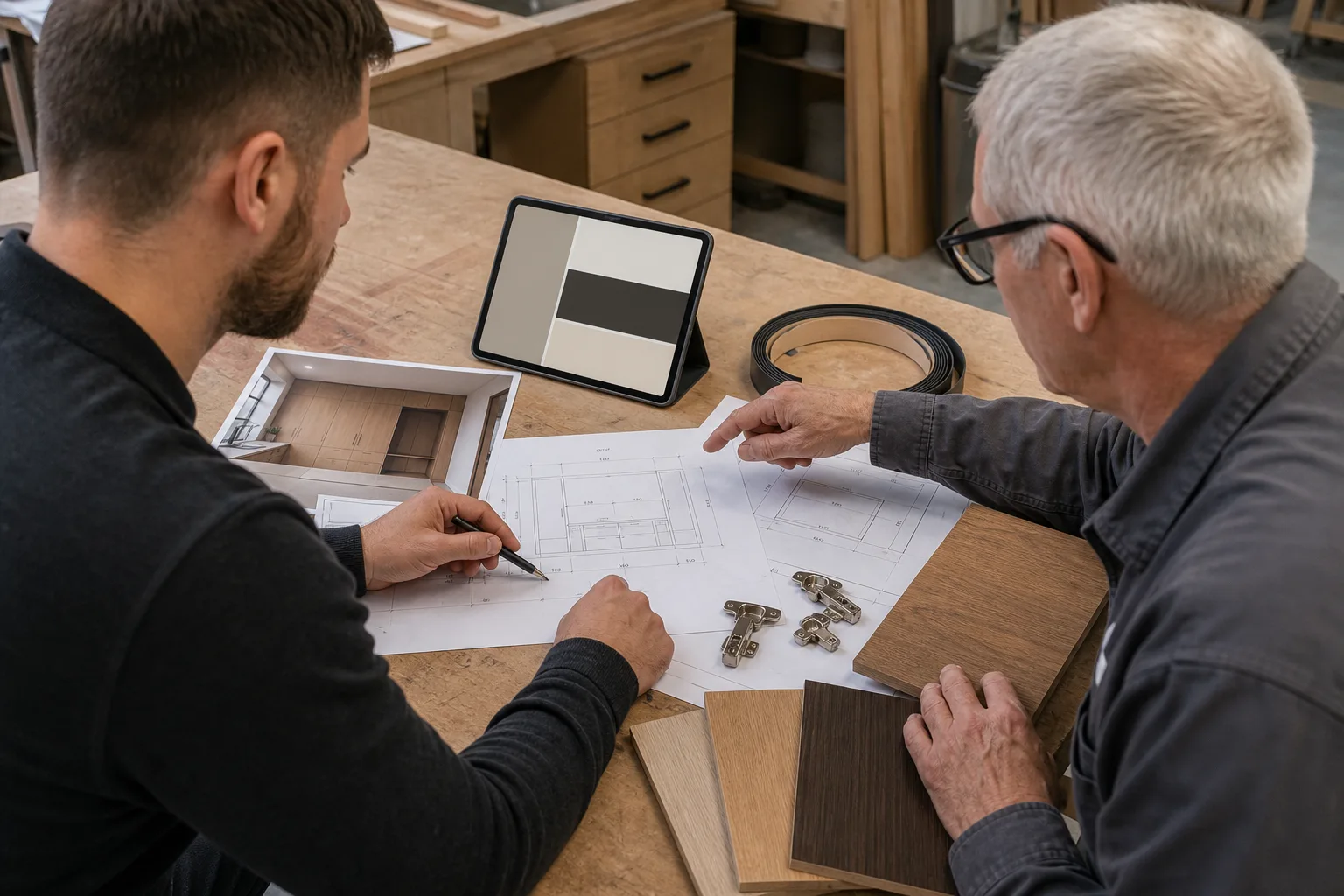
Do not turn a colour or material inferred from an image into fact. Lighting and cameras alter colour, and a wood-look surface may be solid timber, veneer or board. Instead of assuming oak, leave the final sample or catalogue selection for an explicit confirmation step.
Make the Quote a Scope Document, Not One Number
Show dimensions, carcass and door material, internal fittings, accessories, delivery, installation, removal and wall work as separate lines. State what is excluded. A broad phrase such as turnkey does not automatically explain electrical work, plumbing, painting or disposal of existing furniture.
- Give every revision a date and version number.
- Show how a changed dimension or material affects the total.
- Do not treat sample approval as equal to choosing a colour on screen.
- Share a verified production and installation window rather than an invented delivery date.
- Use approved business language for deposits, cancellation and revisions.
Keep WhatsApp Permission within the Quote Request
Requesting a quote does not mean the customer wants future promotions. Meta's official WhatsApp opt-in guide requires a clear record of what communication the person agreed to receive and from which business. Manage quote, measurement and installation messages separately from marketing permission.
Business-initiated reminders after a conversation closes may require an approved template and a permission flow that follows current WhatsApp rules. Do not disguise an unsolicited promotion as a service update. When marketing permission is withdrawn, promotional automation should stop while genuinely necessary order communication remains tied to its separate purpose.
Check Workshop Capacity before Promising Delivery
A product that can be built may not be available in the requested period. Capacity includes design, cutting, edging, finishing, hardware supply, trial assembly and installation teams. The assistant should not promise delivery because one calendar day appears empty. Open a capacity review based on the project type and required approvals.
Special materials, imported fittings or finish samples should appear as explicit dependencies. Explain which approval allows a reliable lead time to be issued. This prevents a fast sales response from leaving the production team with a commitment it cannot fulfil.
Give the Workshop a One-Screen Handoff
The human handoff should contain product type, preliminary measurements, room images, material preferences, internal layout, timing expectation, location, access and every promise already made. Mark uncertain fields clearly and never present a model inference as a craftsperson's decision. When the human resolves a question, update the structured record and customer-facing response together.
See our live-agent handoff guide for the general pattern and the pricing page for channel scope. Starting with one product family makes it easier to learn which questions genuinely improve quote quality.
Test Measurement and Revision Failures before Launch
- Test requests that mix millimetres and centimetres or omit a dimension.
- Confirm that a social-media image alone never produces a fixed quote.
- Check that material and internal-layout changes do not silently overwrite the earlier version.
- Verify that customers who decline photos can continue with a sketch or survey.
- Ensure that full workshop capacity blocks automated delivery promises.
- Test that the bot makes no new price or lead-time commitment after human handoff.
A Furniture Quote Flow with BozLat AI
BozLat AI can collect product, dimensions, room, material and installation conditions in WhatsApp, transfer missing or conflicting information to a person and create a readable quote brief for the workshop. The aim is not to automate the craftsperson's design and pricing judgment. It is to make the information behind that judgment complete and traceable. Begin with one product family, one city and one approved quote template.
Frequently Asked Questions
Related Articles
9 min read
WhatsApp Product Holds and Appointments for Optical Stores
Use WhatsApp to confirm frame, colour, branch and hold details for optical shoppers, then schedule an in-store visit without giving health advice.
10 min read
WhatsApp Event Quote Automation for Catering Companies
Collect wedding and corporate event requirements through WhatsApp, then turn guest count, menu and operational details into a clear catering quote.
9 min read
After-Hours Emergency Messages for Apartment Managers
Separate urgent night-time reports from routine requests, alert the right on-call person and leave a complete handover for the daytime property management team.
Ready to set up an AI assistant for your business?
View Pricing