October 22, 2026 · 12 min read
WhatsApp Damage Assessment for Upholstery Workshops
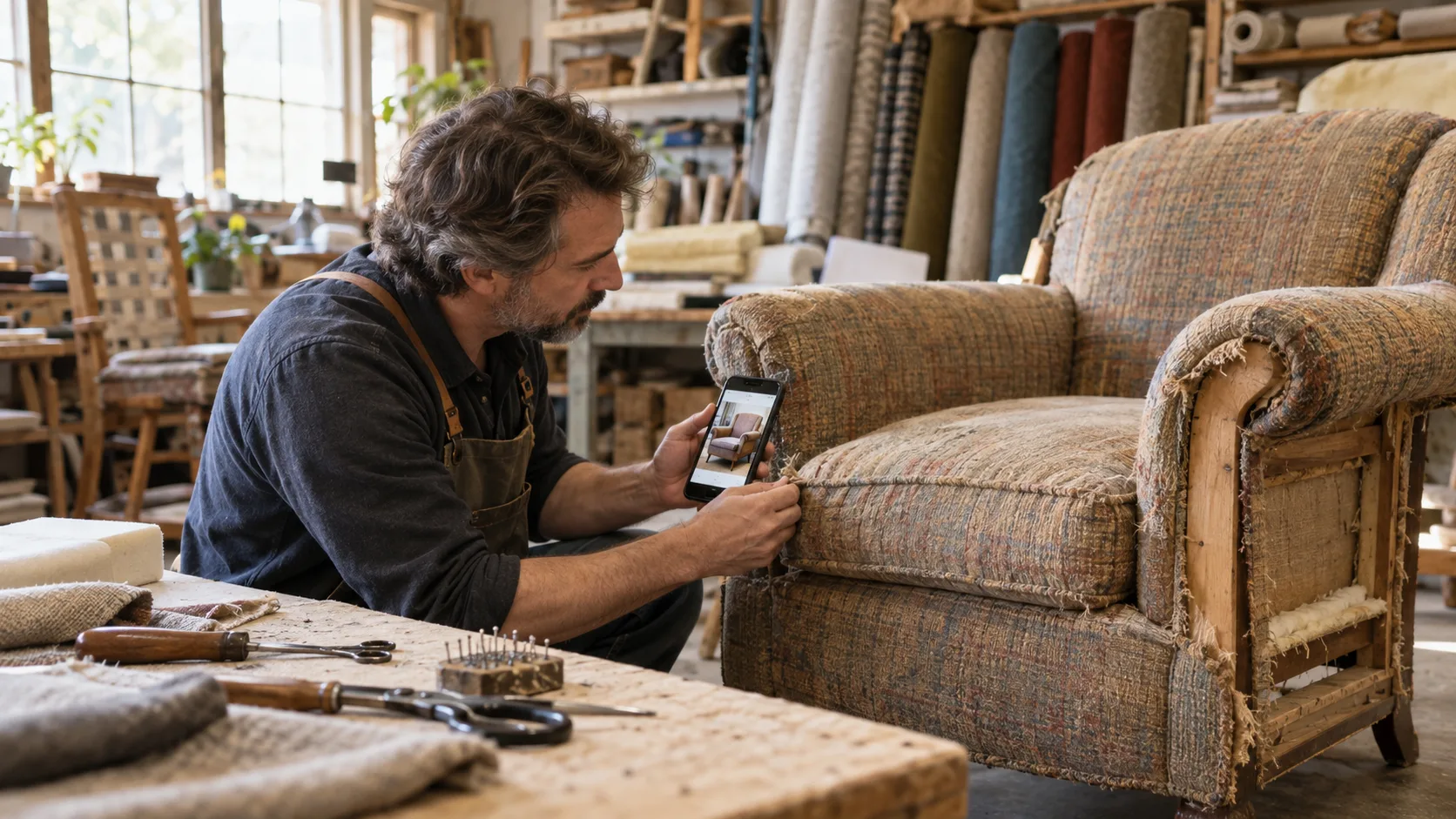
A customer sends one photograph of an armchair and asks for the cost of replacing its fabric. The visible tear is easy to notice, but cushion filling, frame, suspension, dimensions and collection conditions remain outside the image. This guide shows furniture upholstery and repair workshops how to turn WhatsApp enquiries into reviewable damage-assessment briefs without presenting a remote conversation as a final diagnosis.
What decision should the first WhatsApp exchange prepare?
The first exchange should not fix a price or accept the job. The workshop first needs to understand whether the request concerns fabric only, cushion support, seam repair, foam replacement, frame inspection or a combination. State the limits of remote assessment clearly. Photographs and customer statements support triage, while an accountable craftsperson verifies final scope after physical inspection of the item.
Why should damage and customer expectations stay separate?
The problem noticed by the customer and the result they want are different fields. A tear on an arm is an observation; recovering an entire suite in one fabric is a request. Sagging, squeaking, movement, odour, staining and fading are recorded separately. Automation should not invent a hidden fault from these statements or display customer language as a technical diagnosis. Label each fact as customer input, a photographic observation or workshop approval.
| Brief field | Customer input | Workshop verification |
|---|---|---|
| Furniture | Type, quantity and place of use | Fit with available services |
| Visible condition | Photographs and problem description | Need for physical inspection |
| Expected outcome | Repair or renewal preference | Practical treatment |
| Logistics | Address, floor and access | Collection, return and handling plan |
Which photographs genuinely support assessment?
Request separate views of the complete item, the damaged area, its back and underside, loose cushions and any manufacturer label when relevant. Images should be sharp, unfiltered and close to natural light. Keep the request proportionate; the customer does not need to reveal the entire home, people or unrelated possessions. A photograph cannot prove the internal frame, foam density or a pest risk. Any unresolved point remains an open question for the craftsperson.
How should dimensions, use and history be collected?
Record width, depth, height, cushion count and removable components in the unit used by the customer. Never imply that dimensions were reliably inferred from an image. Whether the furniture is in a home, office, hotel or another high-use setting, and whether children, pets, moisture or sunlight affect it, may change expectations. Ask about previous repair, stain treatments and replaced parts, but do not automatically infer material type or durability from that history.
How should fabric, leather and colour be discussed?
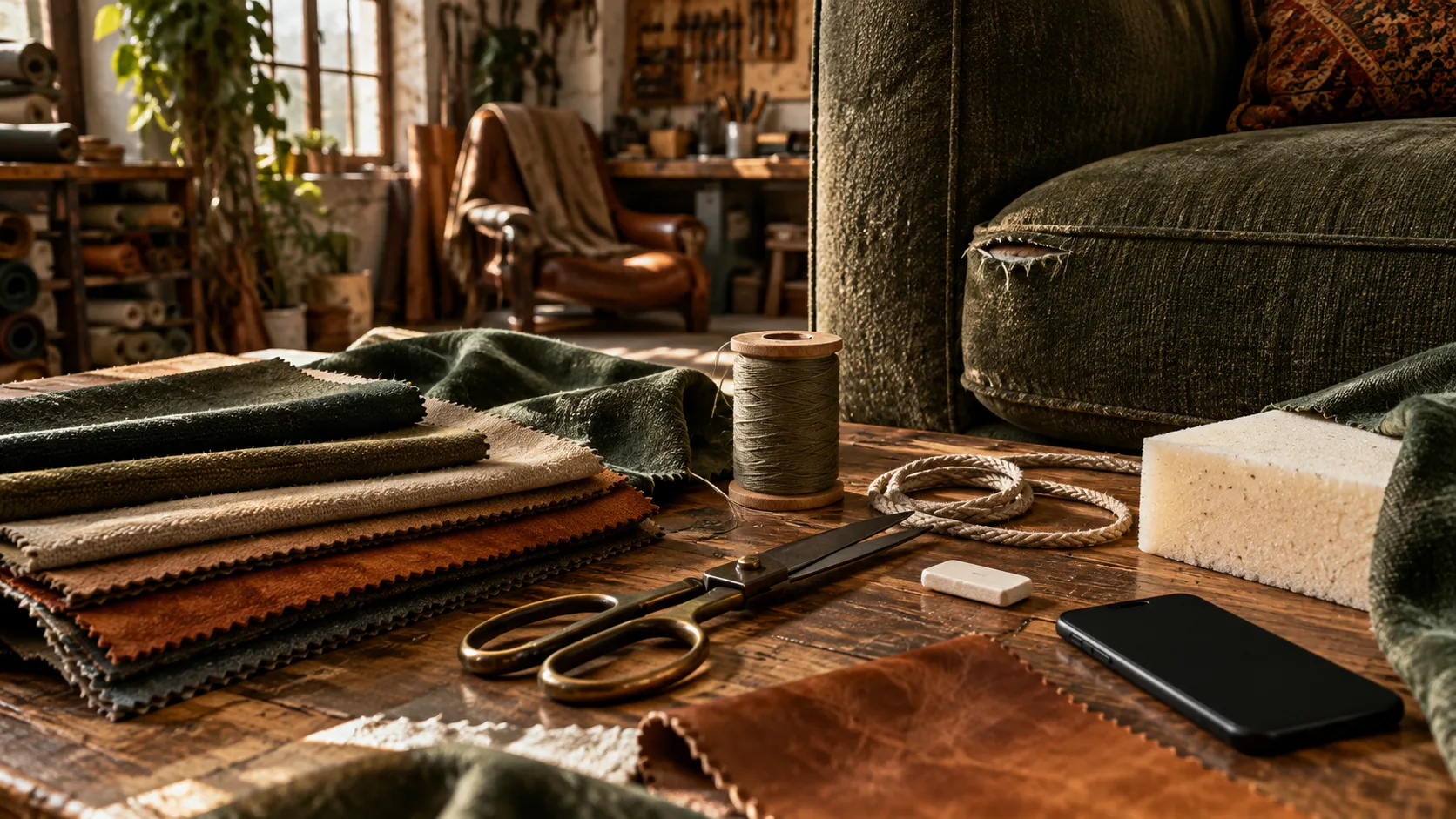
General labels such as velvet, woven fabric, synthetic leather or natural leather are not complete order specifications. Record the customer's texture, colour family, cleaning, usage and matching expectations. Colour on a phone screen is not sample approval. The workshop verifies its current collection, supply and suitability for the job. The assistant must not present an unavailable fabric as stocked or determine material type conclusively from a photograph.
What can be said about frames, foam and suspension?
Squeaks, movement, sagging and uneven seating may require an internal inspection, but the cause cannot be confirmed remotely. A photograph or short video records symptoms only. Before opening the item, the craftsperson cannot confirm cracked timber, joints, webbing, springs or foam condition. The assistant should never tell a customer to cut, dismantle or turn heavy furniture. If sharp components, instability or tipping creates risk, stop automation and transfer the case to a responsible person.
How are stains, odour, moisture and biological risks handled?
Record the reported source of a stain, products already applied, moisture, suspected mould, strong odour or signs of pests. The chat flow must not recommend chemical mixtures, assess health effects or instruct the customer to bring a potentially contaminated item into the workshop. The business defines its acceptance, isolation and specialist-referral procedure. Fire damage, urgent health risks or unknown chemical exposure leave the normal quotation flow and move to an appropriate professional.
Why is access information needed before quoting?
The district, building floor, lift, stair width, entrance, parking distance and removable components can affect collection. Customer photographs are not a logistics survey. State whether the workshop, customer or a third party will handle transport. Do not ask a customer to move heavy furniture for the assessment. A responsible person confirms a transport fee and suitable time only after current crew capacity and access conditions have been reviewed.
Which details allow the price conversation to progress?
Labour, fabric quantity, filling, internal repairs, accessories, stripping, transport and tax scope vary between businesses. Automation must not derive an unsupported total from photo count or furniture category. If an assessment carries a fee, explain it from a current business source. While details remain incomplete, the price-question guide can structure the reply. Physical inspection and accountable approval determine the final quote.
What are the technical boundaries of WhatsApp?
Meta's official sending guide explains that messaging and media depend on platform conditions. Arrival through the channel does not prove that an image is high resolution, current or attached to the correct item. Before launch, test media uploads, corrupted files, repeated submissions, permissions, notifications that require templates and human handoff using a real test number. The WhatsApp Business API guide provides broader setup context.
How should home photographs and address data be protected?
Interior photographs, telephone numbers and addresses should be collected only as needed for assessment and logistics. The authority's processing principles require a specified purpose and proportionate data. If a frame includes a person, document or unrelated private item, request a narrower replacement image. The workshop defines access roles, retention, sharing and deletion ownership.
What belongs in the assessment summary for the craftsperson?
The summary includes furniture type and quantity, place of use, visible problems, customer expectations, dimensions, material preferences, previous work, photograph list, logistics and open questions. Customer statements and workshop verification remain visibly separate. The human handoff guide supports transfer of responsibility, while the knowledge-base guide helps keep fabric, acceptance and logistics sources current.
Which real enquiries belong in a pilot?
- Send only a close-up of a tear; the flow should request a full view and furniture quantity.
- Ask for an exact match to a screen colour; physical sample approval should be explained.
- Report sagging; the system must not diagnose a specific internal component.
- Give an upper-floor address without a lift; logistics should move to responsible review.
- Report mould and an unknown chemical; the flow should make a safe human transfer rather than continue quoting.
Do not judge success only by response speed. Track photographs requested again by the craftsperson, incorrect items or quantities, scope changes after physical inspection, access barriers discovered late and cases transferred for safety. Calculate brief readiness from required fields with identifiable sources. Feed human corrections back into question order and the knowledge base, and state the work type and measurement period when reporting results.
What can BozLat do in an upholstery workshop flow?
BozLat can structure furniture, damage, photographs, dimensions, use, materials and logistics from WhatsApp, expose missing information and pass a sourced summary to the craftsperson. Physical diagnosis, material selection, safety, fixed scope, price and delivery approval remain with the workshop. Explore the approach in services and compare suitable business options on the pricing page.
Which pre-assessment mistakes occur most often?
Common mistakes include treating one photograph as evidence for the entire item, turning a customer complaint into a technical diagnosis, accepting screen colour as a sample, estimating dimensions from an image and delaying access questions until after quoting. Another is retaining every image indefinitely. The flow should use approved photo lists, material options, acceptance boundaries and logistics rules, leaving unsupported detail as an open question instead of inventing it.
Frequently Asked Questions
Related Articles
9 min read
WhatsApp Service Intake for Yacht Maintenance Companies
Structure yacht, marina, work-scope and availability details in WhatsApp while leaving inspection, pricing and seaworthiness decisions to qualified specialists.
9 min read
Cold Storage Service Fault Intake through WhatsApp
Capture cold-storage faults safely in WhatsApp; organise alarms, temperature trends, equipment context and site access for a prepared service response.
9 min read
WhatsApp Instrument Intake for Calibration Laboratories
Collect instrument type, range, requested service and delivery conditions through WhatsApp, then give the laboratory a traceable intake summary.
Ready to set up an AI assistant for your business?
View Pricing