October 24, 2026 · 12 min read
WhatsApp Photo Booking Briefs for Pet Grooming Salons
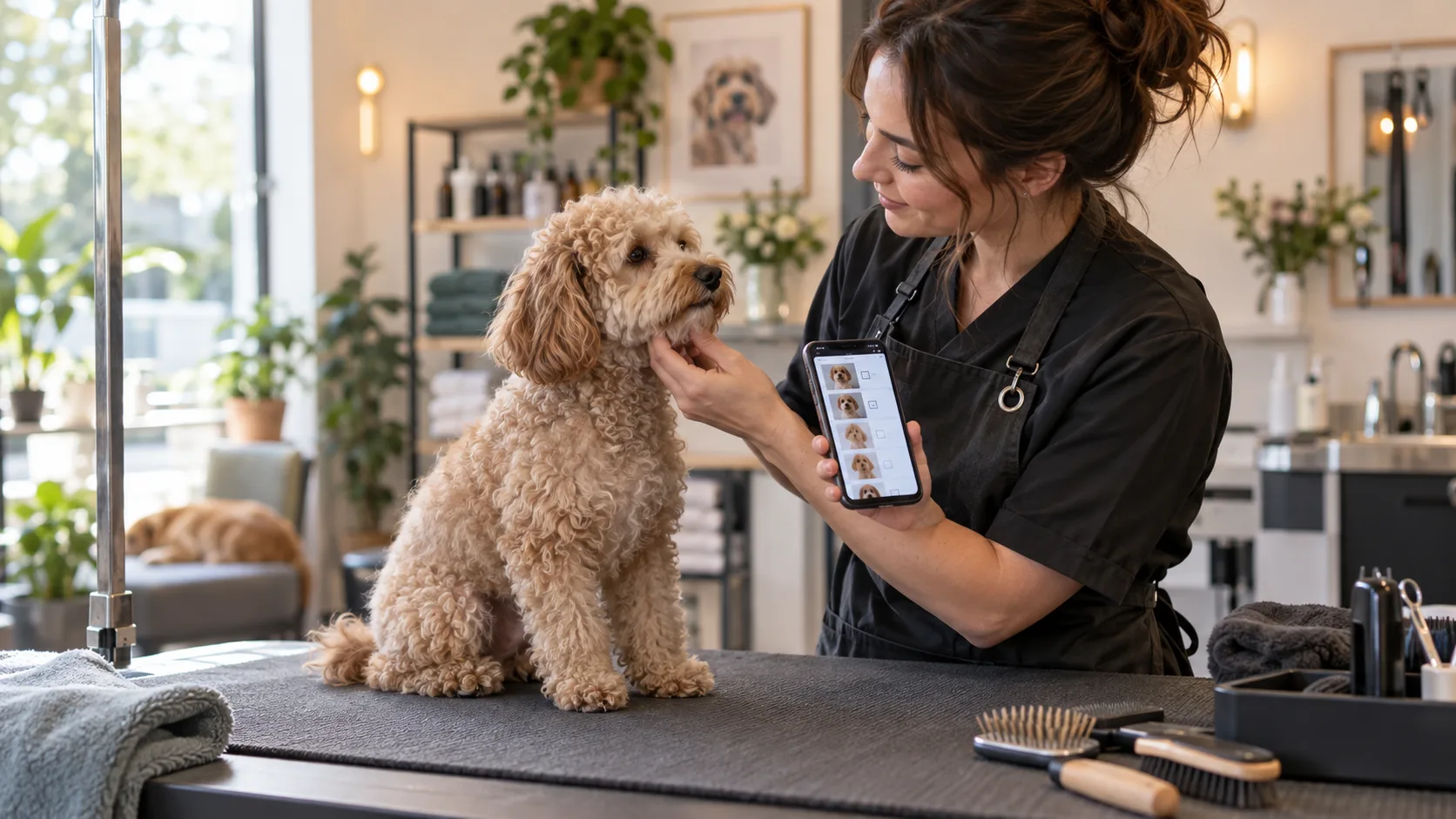
A pet owner may send one photograph on WhatsApp and ask for the first available bath, trim and nail-care appointment. The picture starts the conversation, but coat type, matting, animal size, previous experience, requested services and safe working time remain uncertain. This guide shows pet grooming salons how to turn that exchange into a reviewable photo booking brief without presenting a remote conversation as a final assessment.
What decision should the first WhatsApp exchange prepare?
The first exchange should not promise a fixed duration, price or treatment before the animal is seen. The flow establishes whether the request fits the salon's service scope, which facts are missing and what a groomer must verify. It can collect preferred time ranges, while final confirmation follows review of staff availability, safe acceptance conditions and the realistic duration of the requested service.
Which booking fields should remain separate?
Species, age, approximate weight, coat type, last grooming date, requested treatments, earlier salon experience and the owner's communication preference are separate fields. An owner's statement that the pet is very calm is useful input, not salon verification. A small appearance in a photograph is not a reliable weight. Labelling each record as customer input, visual observation or staff approval preserves its source during handoff.
| Brief field | Customer input | Staff verification |
|---|---|---|
| Animal details | Species, age, approximate weight | Fit with services and equipment |
| Coat condition | Photographs, last visit, home routine | Matting and treatment scope |
| Handling | Previous experience and triggers | Safe handling and human review |
| Booking | Preferred day ranges | Duration, staff and exact time |
Which photographs are genuinely useful?
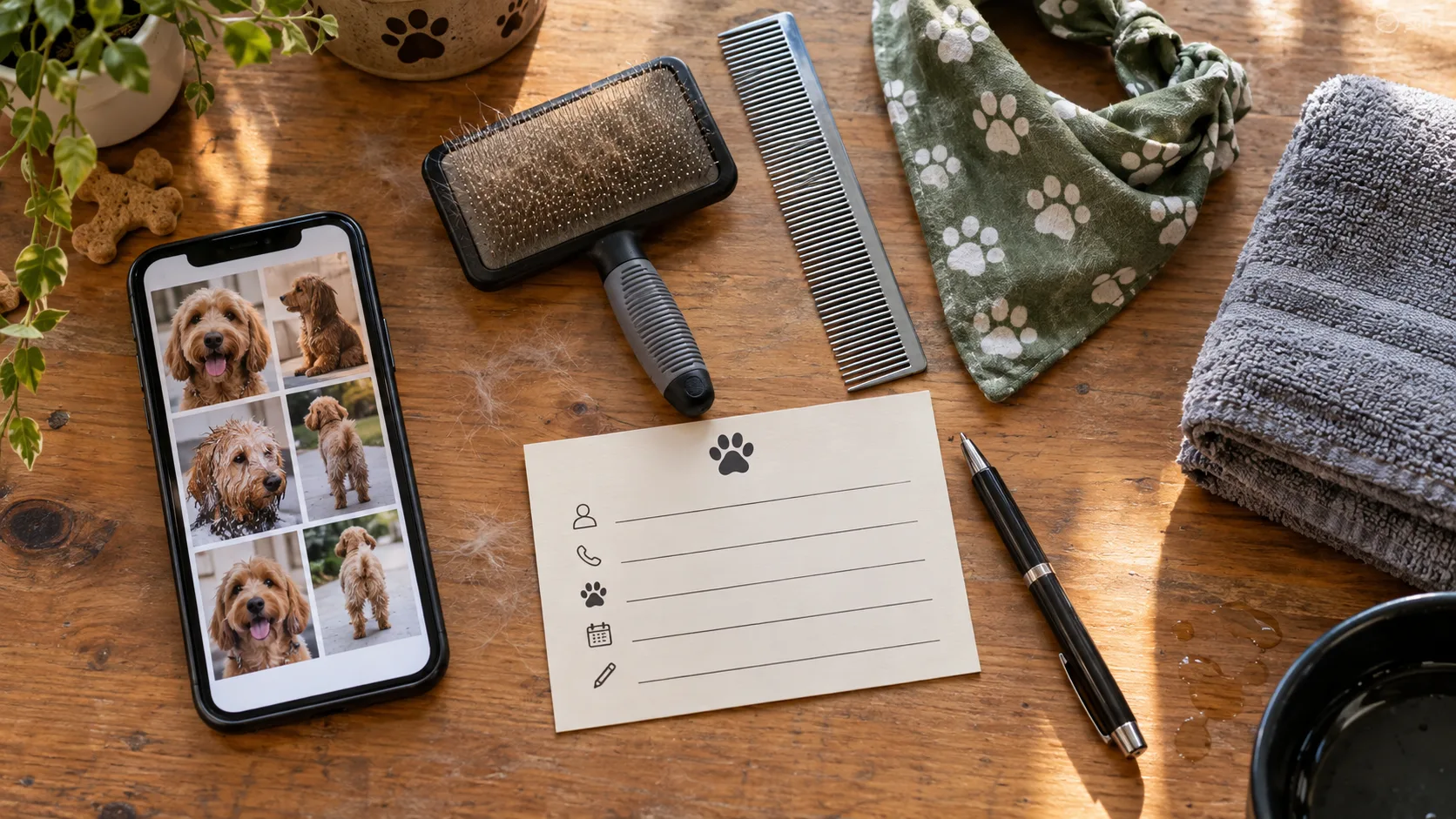
Request separate, clear views of the full body, back and side of the coat, any reported problem area and the paws when relevant. Images should be current, unfiltered and well lit. Never ask an owner to force the animal into position, expose a feared area or attempt a risky movement. A picture cannot confirm the deeper coat layers, skin condition or the animal's response during the appointment.
How is the requested service clarified?
Bathing, drying, brushing, scissor finishing, clipping, nail care and cleaning around the ears should not disappear inside one generic grooming label. Record the look the owner wants, everyday maintenance priorities and any areas they want preserved. Do not choose a style automatically from breed. Use the salon's current service boundaries, and move requests involving chemicals, dye, treatment or sedation away from the ordinary grooming flow.
How should coat type and matting be discussed?
Descriptions such as curly, double-coated, long or short provide a starting point but do not determine duration by themselves. Ask when the coat was last brushed, which tools are used at home, where knots have been noticed and whether it was previously shortened. Automation must not grade matting from a photograph, promise that the coat can be saved or guarantee a particular length. Staff explain practical options after a physical check.
Why ask about handling and previous experience?
Some owners may report sensitivity to loud sound, dryers, paw contact, face handling, unfamiliar rooms or other animals. Record attempted biting, escape, freezing, severe fear or a previous session that ended early without labelling the animal. This information helps plan safe staffing and time. The assistant cannot guarantee behaviour; a risky case requires direct staff review or referral to an appropriate professional.
Where is the health and safety boundary?
If an owner reports an open wound, bleeding, obvious pain, breathing difficulty, heavy suspected parasites or sudden illness, automated booking should stop. Chat does not diagnose, recommend medication or replace veterinary assessment. The salon should connect its acceptance rules, urgent handoff route and postponement conditions to an approved source. Until a responsible person reviews uncertainty, the flow should prefer the safer path.
How are appointment duration and capacity planned?
Duration does not come from animal size alone. Coat condition, service combination, drying, breaks, equipment and staff experience all matter. The flow collects preferred days and time ranges but should not treat every open calendar slot as suitable. A groomer confirms the required duration and staff match. Set expectations about possible delays, early collection requests and whether the owner can wait nearby before the appointment is confirmed.
When should the price conversation happen?
Depending on the salon, price may reflect species, size, coat condition, treatment scope, products, additional time and tax treatment. The assistant must not create an unsupported total from a photograph. If a starting range is available, present it with conditions from a current salon tariff and identify elements that may change after inspection. Use the price-question guide while essential details remain incomplete.
How should WhatsApp consent and follow-ups work?
Messaging to request an appointment is not the same as asking for future promotions. Meta's official WhatsApp opt-in guidance describes an explicit permission expectation for business-initiated messages. Keep reminders, aftercare follow-ups and marketing categories separate, and make the business and purpose clear. The WhatsApp Business API guide covers the broader setup path.
How should photographs and contact data be protected?
Home images, phone numbers, booking notes and owner names should be collected only to the extent necessary for the service. The authority's processing principles require specified purpose and limited, proportionate processing. If a frame includes a person, document or unrelated private area, request a tighter photograph. The salon defines accountable roles for access, retention, sharing and deletion.
What should pass to the groomer?
The summary includes animal details, requested services, coat observations, photograph list, previous experience, reported triggers, health warnings, time preferences and open questions. Customer statements and salon approval remain distinct. The human handoff guide keeps responsibility visible, while the knowledge-base guide supports current service, acceptance and pricing sources.
Which scenarios belong in the pilot?
- Send only a face photograph; the flow should ask for a full-body view, coat information and approximate weight.
- Demand a fixed same-day time; no booking should be confirmed before staff duration is verified.
- Say a previous groomer ended the session; the handling note should move to safe human review.
- Send a picture of an open wound; ordinary grooming booking must stop and an appropriate referral should follow.
- Decline promotional messages; appointment communication and marketing preference must remain separate.
Do not measure success only by booking count. Track fields staff ask again, incorrect duration estimates, service scope that changes at physical inspection, missing handling notes, cancellation reasons and cases transferred for safety. Brief readiness should use required fields tied to current sources. Feed human corrections back into question order and the knowledge base, and state the reporting period and service type.
What can BozLat do in a pet grooming flow?
BozLat can structure animal, coat, photo, service, handling and timing information from WhatsApp, expose missing details and pass a sourced summary to the groomer. Health assessment, safe acceptance, physical inspection, grooming method, fixed duration, price and booking approval remain with the salon. Explore the approach in services and compare business options on the pricing page.
Which booking-brief mistakes occur most often?
Common mistakes include accepting one photograph as sufficient, deriving a treatment from breed, treating the owner's calm description as a behaviour guarantee, keeping health warnings in ordinary booking and assuming every empty calendar slot fits the work. Combining marketing permission with an appointment request also undermines trust. The flow should use current service boundaries and human approval, leaving unsupported details open instead of completing them without evidence.
Frequently Asked Questions
Related Articles
9 min read
WhatsApp Installation Scheduling for Fleet Tracking
Plan fleet tracker installation by vehicle, location, access, downtime and technician availability in a verified WhatsApp appointment workflow.
11 min read
WhatsApp Maintenance Booking for Compressor Services
Collect equipment records, site access, downtime windows and team approval through WhatsApp; turn compressor maintenance requests into confirmed visits.
5 min read
WhatsApp Order and Special Occasion Reminder Automation for Florists
How do florists manage taking orders, same-day delivery questions, and special occasion (anniversary, birthday) reminders with a WhatsApp AI assistant?
Ready to set up an AI assistant for your business?
View Pricing