October 18, 2026 · 11 min read
WhatsApp Fault Intake for Industrial Door Services
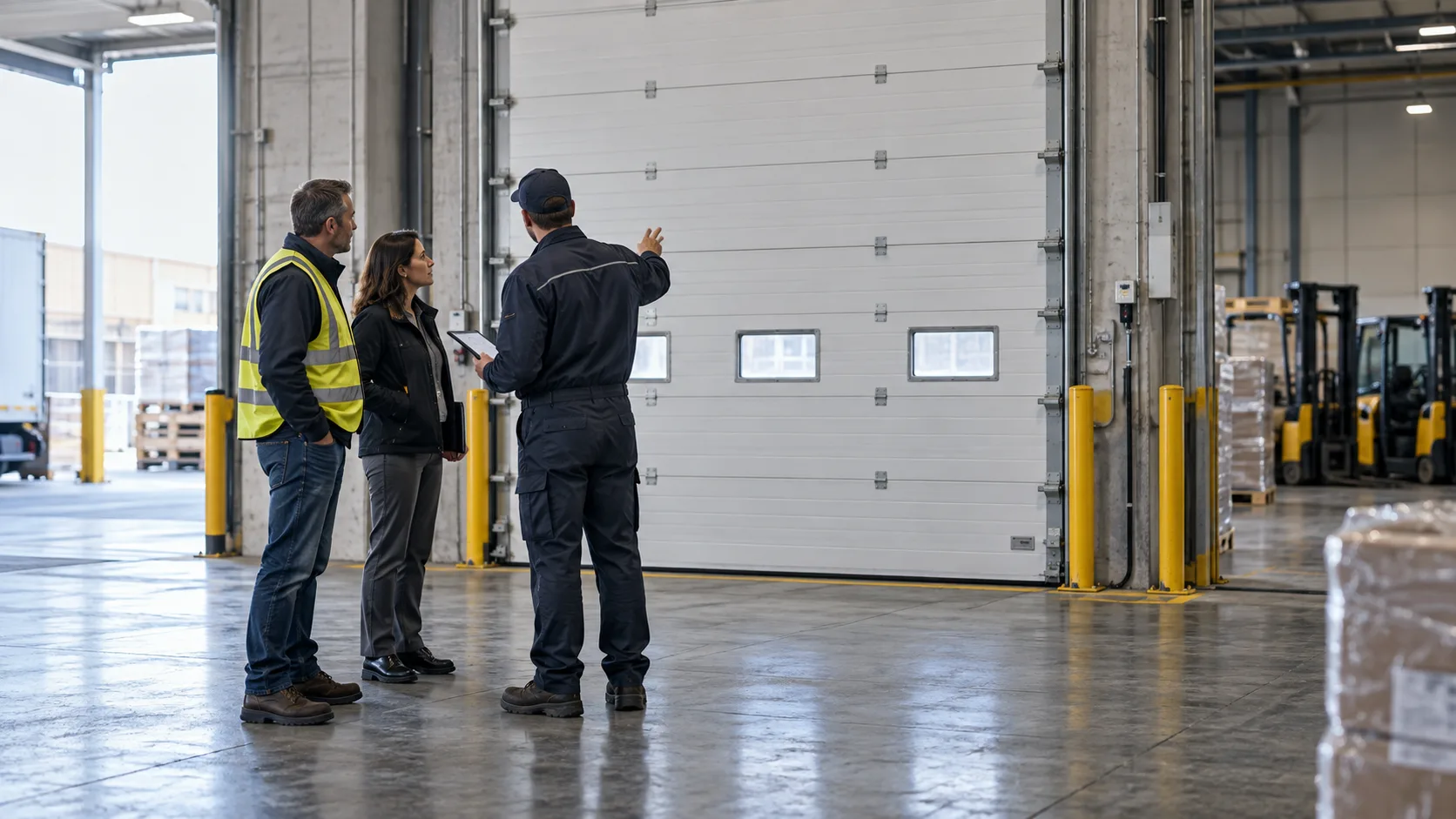
A warehouse manager writes that a loading door will not close and asks for a technician immediately. The message does not identify the affected door, say whether it is in a safe position, describe vehicle and pedestrian traffic or explain the effect on dispatch. Repair instructions based on one photograph can increase risk. This guide helps businesses servicing sectional doors, rapid PVC doors and loading-area equipment create a safe and traceable first record in WhatsApp.
What decision should the first message support?
The first conversation should not diagnose a component. The service team needs to understand whether the event requires urgent human attention, whether the area has been secured, which door is affected and when an appropriate technician can attend. Keep customer statements separate from technical verification. At the end, the user needs a safe next step, the status of the record and the check required before an appointment is confirmed, rather than an unsupported repair promise.
How should the door identity be verified?
Collect the site, building, loading-bay or door number, door type and the operator's asset code where available. Brand or colour alone does not identify the equipment. Adjacent doors can have different service histories. If a label is safely visible, request a photograph without asking a worker to open a panel or approach a moving area. The record shows the identity reported by the customer and leaves explicit fields for technician verification.
| Record field | WhatsApp input | Service verification |
|---|---|---|
| Location | Site and door number | Correct equipment |
| Symptom | Observed or heard condition | Fault cause |
| Safety | Has the area been isolated? | Work isolation |
| Impact | Dispatch and access status | Response priority |
Why must a symptom remain separate from a diagnosis?
Statements such as slow movement, stopping halfway, unusual noise or no response to a control are observations. They do not prove a motor, sensor, mechanical or controller fault. The assistant must not present possible causes as conclusions or ask a customer to handle power, springs, cables or safety devices. Record the visible condition, when it began, whether it repeats and the current door position. Diagnosis follows inspection by an authorised technician.
How should an urgent safety report be handled?
If someone or a vehicle is trapped, a part may fall, electricity is exposed or movement is uncontrolled, stop the routine appointment flow. Tell the customer to follow the operator's local emergency procedure and authorised safety contacts. Do not instruct anyone to run, lift or pass beneath the door. Transfer the complete record to a responsible human. Automation should preserve critical information and route it correctly, not make a technical safety decision.
What boundaries belong around photo and video requests?
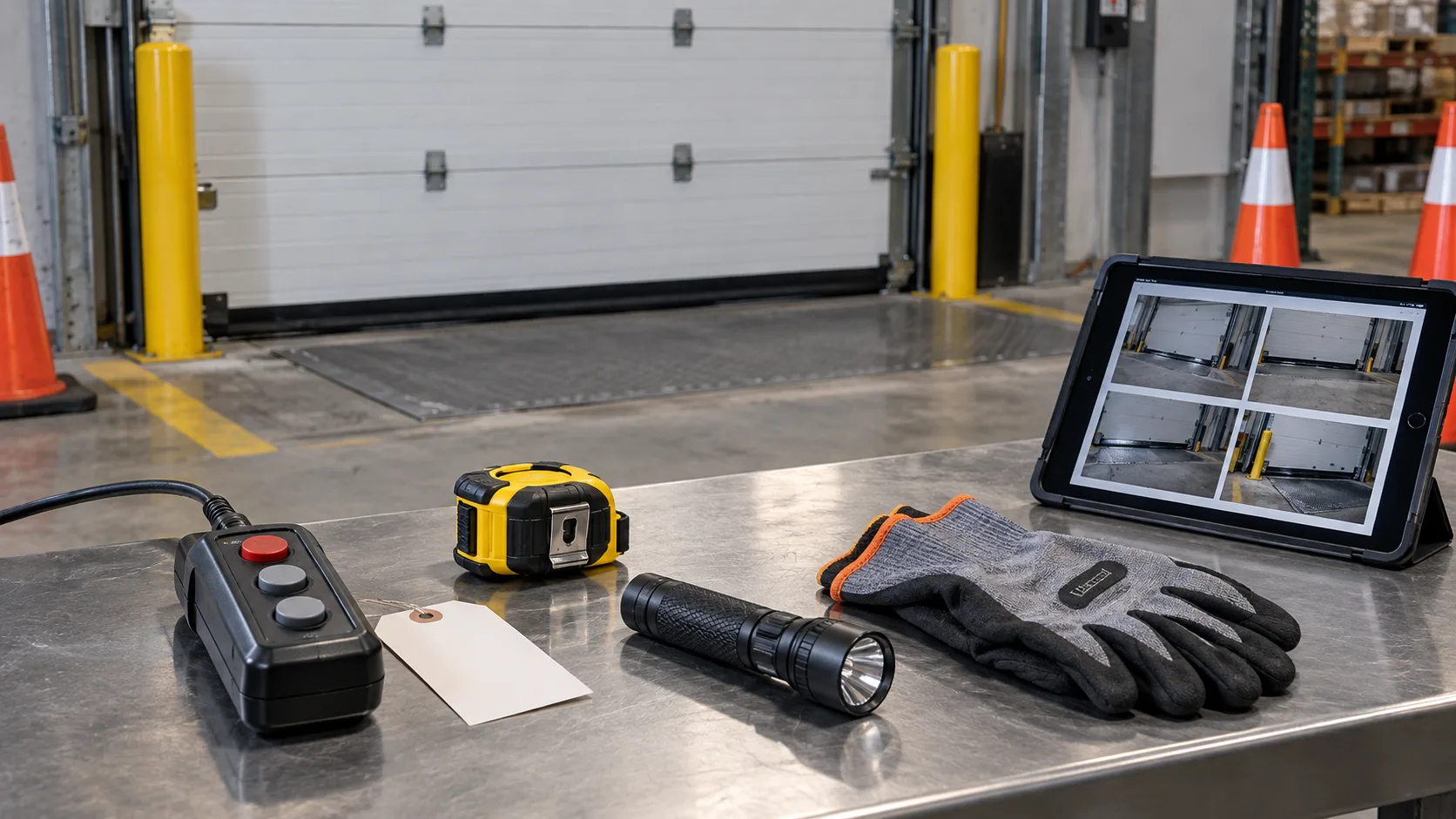
Request a general door view, rails visible from a safe distance, the outside of a control box and an asset label. Never ask a worker to cycle the door repeatedly, remove guards, climb or approach damage. A customer who declines images must be able to continue in text. Faces, vehicle plates, security codes and unrelated facility areas are unnecessary. Images help prepare the right technician; they do not amount to remote safety acceptance.
How should operational impact be recorded?
Ask how the affected door supports dispatch, cold storage, pedestrian access or site security. An alternative door provides planning context but does not make the fault harmless. A customer marking a case urgent should not automatically receive a same-day guarantee. Record the time operations stopped, waiting vehicles and inaccessible areas as customer statements. Priority follows the service company's approved classification and review by responsible staff.
When is the service appointment confirmed?
The preferred time, the facility's permitted work window and the appointment confirmed by the service are different fields. Safety contacts, access permission, escorts, energy isolation and clearing a loading bay may be prerequisites. Even with a calendar connection, do not confirm a time until team availability and site conditions are checked. When plans change, preserve the cancellation or rescheduling reason and approval owner rather than silently replacing the earlier appointment.
How should parts and price questions be answered?
One photograph may not reveal a part number, compatibility or the only cause of the fault. The assistant may quote stock, parts, labour time and price only from current approved business sources. When inspection is necessary, do not label an estimate as a firm quote. The price-question guide explains how to continue with missing inputs. A quote should separate parts, labour, access equipment and exclusions.
What belongs in the technician handoff?
Include site and door identity, reported symptom, current door position, safety indicators, operational impact, image sources, access contact and available times. Keep customer assumptions separate from observations. The human handoff guide shows how to transfer responsibility with context. A technician should see open questions without recollecting every detail and should never mistake an automated summary for a technical decision.
How should record data be protected?
Facility photographs, contact details, shift times and access notes can contain security or personal data. The authority's processing principles require information to be relevant, limited and proportionate to a defined purpose and retained only as needed. The business defines role-based access, retention and deletion. Do not request alarm codes, key locations or unnecessary staff information in chat; collect sensitive access details through an approved route.
Which scenarios belong in the pilot?
- Submit a report without a door number; the record should not close before equipment identity is clear.
- Say the door is halfway open; the assistant should ask safety questions without repair instructions.
- Decline photographs; the text-based record should continue.
- Test a full calendar with stopped dispatch; no unapproved attendance time should appear.
- Give a technician finding that differs from the customer's assumption; verify that both remain distinct.
Do not measure success only by first-response time. Track records opened against the wrong door, fields technicians ask again, visits delayed for safety, appointment changes and technical outcomes that differ from initial statements. Calculate completeness from mandatory fields with known sources. Feed early staff corrections back into the questions. If a result is reported, explain which fault types and facilities were measured.
Where should BozLat stop in this workflow?
BozLat can structure door identity, symptoms, safety status, operational impact, images and timing preferences from WhatsApp, expose missing fields and pass a sourced summary to humans. Remote diagnosis, safety decisions, parts selection, firm response times and field acceptance remain with specialists. Review the WhatsApp Business API guide, use the knowledge-base guide for approved boundaries and see scope options on the pricing page.
How should the record close after service?
After the visit, keep the customer statement, technician finding, completed work, open risk, replaced part and follow-up need as distinct statuses. Seeing a photograph or observing one successful cycle is not a permanent-fix guarantee. Tell the customer what is closed and what check remains. Any recurring maintenance recommendation must come from the business's real service programme. The WhatsApp conversation then becomes an auditable service history from first report through handback.
Frequently Asked Questions
Related Articles
10 min read
WhatsApp Fault Intake for EV Charging Network Operators
A practical WhatsApp workflow for EV charging networks to capture station, connector, fault symptoms and safety context before technical handoff.
9 min read
After-Hours Emergency Messages for Apartment Managers
Separate urgent night-time reports from routine requests, alert the right on-call person and leave a complete handover for the daytime property management team.
10 min read
WhatsApp Delivery Reconciliation for Hotel Laundries
Turn missing hotel linen, wrong items and quality complaints into sourced WhatsApp cases; keep counting decisions and replacement approval with people.
Ready to set up an AI assistant for your business?
View Pricing