October 30, 2026 · 9 min read
WhatsApp Service Intake for Pool Water Quality Problems

A residential manager sends a cloudy-water photo in the morning, a hotel employee reports pump noise in the evening, and another customer writes only that the water has turned green. If these messages reach a technician without location, pool type, maintenance history or urgency context, the team can prepare incorrectly before leaving the office. WhatsApp service intake for pool maintenance should not make remote chemical decisions. It should organise observations, separate safety concerns and give the technician a useful case summary.
What is a pool service intake brief?
The brief combines the customer's observed symptom, start time, pool-use status, equipment indicators and recent interventions in one case record. The AI assistant does not declare water safe from a photo, recommend a chemical dose or diagnose equipment failure. Testing, site safety and treatment decisions remain with a trained pool operator or authorised technician.
A good flow does not force the customer through a long form. It first checks for signs affecting human or electrical safety, then gathers descriptive details. The opening message should state that the conversation records a service request and does not constitute technical approval.
Which safety boundary belongs in the first reply?
Customers can describe water colour, odour or appearance, but the assistant should never confirm swimming safety from those statements. If the customer reports water around an electrical panel, exposed wiring, heavy smoke, an intense chemical smell, injury or illness, the normal questions stop. The response should direct them not to use the area and to contact the relevant emergency or authorised human channel. The bot must not provide remote intervention instructions.
The official CDC guidance for operating and managing public pools emphasises trained staff, regular testing, records and equipment maintenance under manufacturer instructions. Local rules and facility procedures remain controlling; values in guidance from another jurisdiction should not be applied automatically as a prescription for every Turkish facility.
Which details should the service record collect?
- Facility context: private pool, residential complex, hotel, sports facility or another operation.
- Location: service address, access point and the responsible person's preferred contact channel.
- Symptom: colour, cloudiness, odour, surface formation, leak, noise or display warning.
- Timing: when it was first noticed, whether it is constant or intermittent, and last use.
- Equipment: pump, filter, dosing unit, heating, lighting or another component.
- Recent action: testing, cleaning, product addition, backwashing, part replacement or power loss.
- Use status: whether the pool is open, closed or temporarily kept out of use as a precaution.
The assistant should not ask customers to guess a technical value they do not know. If a test result is shared, request the method, time and unit together. A display screenshot or equipment photo can help when the warning and product identification are visible, but an image alone does not prove calibration or measurement accuracy.
How should photos and videos be requested?
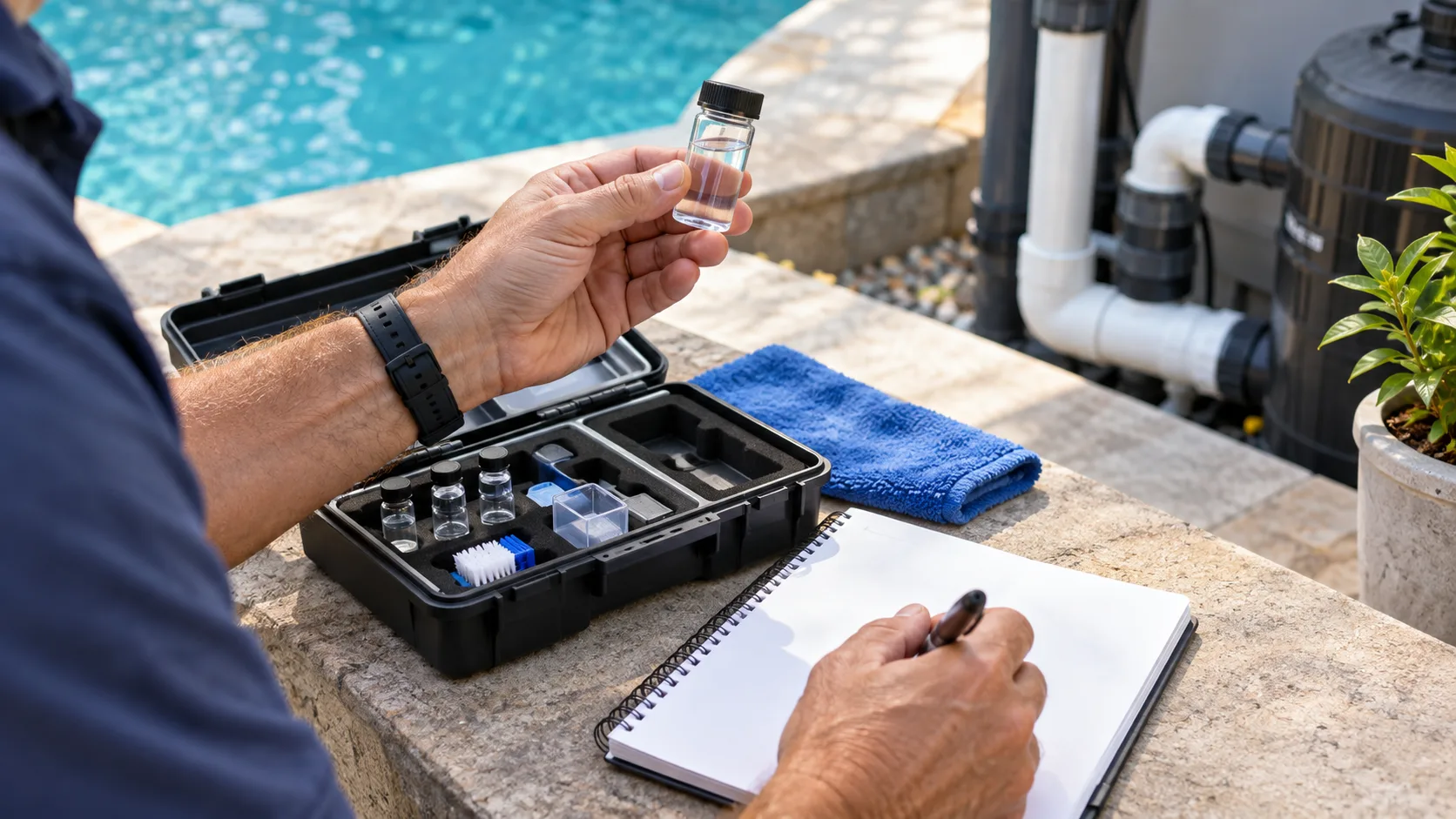
A general pool view, the affected area and the equipment display can be requested as separate images. The customer must not be encouraged to walk across a slippery surface, approach live electrical equipment or open a chemical container. Any video should be captured only from a safe distance and within the facility's existing procedures.
Images may show guests, children, vehicle plates or employee details. Ask for only the area needed to describe the issue and avoid retaining irrelevant personal information. The official personal-data processing principles from Turkey's data protection authority stress specific purpose, relevance, proportionality and limited retention. The business must build its own notice and retention process around applicable obligations.
Why must symptoms remain separate from diagnosis?
Green-looking water does not point to one cause. Lighting, surface reflection, filtration, maintenance history and measurement conditions can change the assessment. Pump noise may relate to bearings, air, flow or another mechanical condition. The assistant records the symptom as a customer observation and does not turn it into a confirmed cause.
This distinction reduces incorrect material and time planning. The bot should not store labels such as algae, filter failure or chemical imbalance as customer facts. It should use sourced language such as the customer reports green-looking water or an intermittent sound while the pump is running.
What should the technician handoff summary contain?
| Summary field | Information from WhatsApp | Human decision |
|---|---|---|
| Safety | Odour, electricity, injury and use status | Emergency route and conditions for site entry |
| Water appearance | Colour, clarity, surface and photo time | Testing plan and technical assessment |
| Equipment | Noise, leak, warning and operating behaviour | Diagnosis, parts and intervention |
| History | Last service, tests and customer actions | Reliability of records and next step |
| Plan | Address, access, suitable time and facility contact | Priority, crew, duration and service approval |
The summary should expose missing and conflicting fields, not merely shorten the conversation. If the customer says the pool is closed and later says guests are using it, the difference belongs at the top. If a test-image date conflicts with the message date, the bot should not choose one; it sends both to the technician.
The customer should see when a person takes over. After saying that a specialist is reviewing the case, the bot should not repeat the same questions or promise a time. The live-agent handoff guide can help preserve case context and responsibility during the transition.
How should priority and appointments be decided?
The assistant can collect possible time windows as requests, but it should not assign priority from a keyword alone. Facility use, safety indicators, technician qualifications, required equipment and route planning must be considered together. Messages should distinguish request received, priority under review and appointment confirmed.
After approval, the address, responsible contact, access instructions and current use status can be summarised again. Reminders should follow customer preference and the current business policy. The appointment reminder timing guide helps confirm visits without unnecessary message volume.
How should the WhatsApp technical flow be monitored?
The WhatsApp Business Platform can deliver incoming messages and outgoing-message states through webhook notifications. The official Meta documentation for WhatsApp Cloud API webhooks explains that message and status events arrive as structured notifications. A delivered status must not be interpreted as customer approval or a resolved service case.
Processing the same event more than once can create duplicate service records. Store the message ID, case ID and last processed state so repeated webhooks are handled idempotently. Consult current official Meta documentation for permissions, template requirements and messaging rules. The WhatsApp Business API guide provides broader context.
Where should chemical and equipment advice stop?
The bot must not calculate a dose from a product name, instruct the customer to mix chemicals or assume site safety equipment. Remote directions can be dangerous without the product label, safety data, pool volume, measurement method and local procedure. Uncertain cases go to an authorised operator.
The same boundary applies to equipment. The assistant should not instruct someone to energise a unit, open a protected cover or bypass a safeguard. It collects only the current state, error code and details visible safely. Technical action follows the maintenance company's authorised procedure and manufacturer documentation.
How should performance be measured?
Chat-to-appointment conversion is insufficient. Track fields technicians ask again, cases prioritised incorrectly, avoidable site visits, technicians dispatched without required equipment, duplicate records and preliminary requests mistaken for confirmed appointments. Results should not be generalised without facility type, period and issue category.
Human corrections should improve question order and the knowledge base. When an equipment model, service area or emergency procedure changes, affected replies need to be identifiable. Each answer should remain traceable to its source and policy version.
What can BozLat do in this flow?
BozLat can collect facility, symptom, timing, equipment, safely captured images and access details through WhatsApp, flag contradictions and send the technician a sourced service summary. Water safety, diagnosis, chemical treatment, field priority, price and appointment approval remain with the maintenance company. Explore the approach in the services section and compare options on the pricing page.
Frequently Asked Questions
Related Articles
11 min read
WhatsApp Fault Intake for Industrial Door Services
Collect door identity, symptoms, access and operational impact in WhatsApp so industrial door service teams receive a safe and verifiable fault record.
10 min read
WhatsApp Fault Intake for EV Charging Network Operators
A practical WhatsApp workflow for EV charging networks to capture station, connector, fault symptoms and safety context before technical handoff.
9 min read
After-Hours Emergency Messages for Apartment Managers
Separate urgent night-time reports from routine requests, alert the right on-call person and leave a complete handover for the daytime property management team.
Ready to set up an AI assistant for your business?
View Pricing